 Malaga City Guide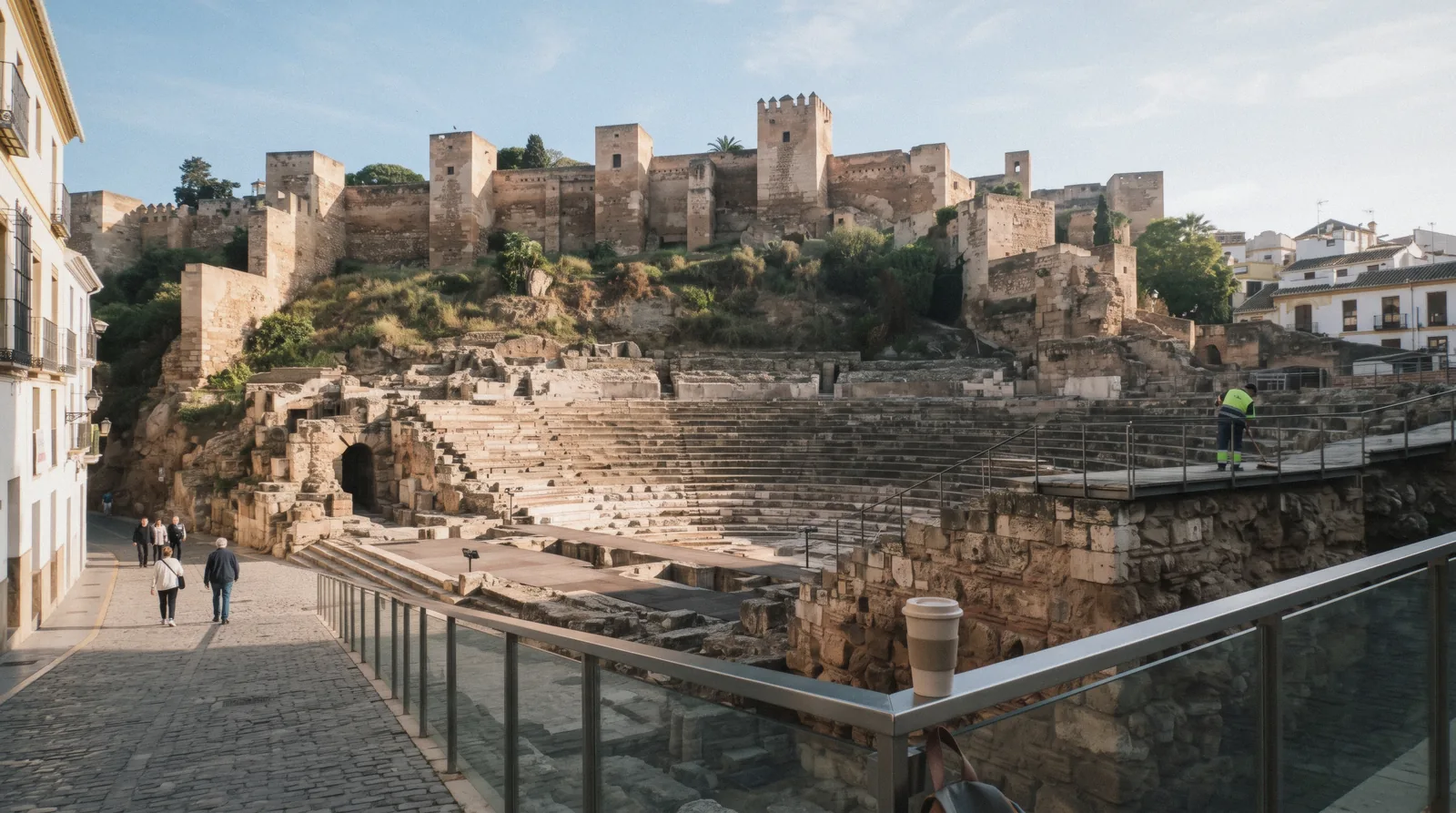
Roman Theatre of Málaga
The Roman Theatre Málaga keeps at the foot of the Alcazaba is a first-century building under Augustus, buried for centuries, found in 1951 and free to enter at all times. This page carries the Junta de Andalucía's hours and closed days, the 30-minute rule, what the glass viewing platform on Calle Alcazabilla shows, what the cavea and stage are, how the theatre was quarried to build the fortress above it, and how it fits with the Alcazaba at its gate and Gibralfaro Castle on the hill. The paid monuments' tickets are on the Alcazaba tickets page, and the rest of the city is ranked on things to do in Málaga.
Quick answer Free, the hours, the Monday closure and the glass platform, in three lines
The Roman Theatre is free for everyone, open Tuesday to Saturday 10:00 to 18:00 and on Sundays and holidays 10:00 to 16:00, closed on Mondays and on 1 and 6 January, 1 May and 24, 25 and 31 December. Entry stops 30 minutes before closing and the Junta caps numbers inside for safety.
Key takeaways
- No ticket exists, so any listing that sells 'Roman Theatre tickets' is selling the Alcazaba above it or a guide. The 90-minute guided walk across both is the honest version of that bundle, and the theatre alone needs neither
- The glass pyramid on Calle Alcazabilla is a viewing platform over the Roman salting vats found under the street, and the terrace beside it shows the whole cavea from above at any hour, including Mondays when the site is shut (the free things in Málaga)
- Do the theatre before the fortress: it closes at 18:00, and at 16:00 on Sundays, while the Alcazaba stays open to 20:00 in summer and the castle keeps the same hours
Key facts
Opening hours
| Tue–Sat, all year | 10:00–18:00 |
|---|---|
| Sundays and public holidays | 10:00–16:00 |
| Last entry | 30 minutes before closing |
Closed Mondays. 1 and 6 January, 1 May, 24, 25 and 31 December. Other holidays by email enquiry
Admission
- Adult
- Free
- Reduced
- Not applicable. There is no ticket
- Free
- Everyone, every open day
Planning it
- Time needed
- Not stated by the Junta. Our routing: 20 to 30 minutes inside, 5 minutes from the terrace above
- Book ahead
- Optional — walk-up usually fine
- Address
- Calle Alcazabilla s/n, 29015 Málaga. Entrance beside the glass pyramid
Three ways to stand in the Roman Theatre, the free official entry first and the two guided walks that pair it with the Alcazaba second, priced from the Junta's enclave page and the operators' listings as read in Q3 2026. The guided rows include the fortress ticket, which is where their price comes from.
Do you want the theatre explained, or just seen? Seeing it is free.
| Option | Price | Includes | Cancel | Book |
|---|---|---|---|---|
| Free entry, Junta de AndalucíaEveryone. Walk in through the door beside the glass pyramid. The only limit is capacity and the 30-minute rule before closing. | Free | Theatre, interpretation centre, no booking. Guided visits by reservation on 951 501 115 | Not applicable | Official site |
| Guided walk, theatre and Alcazaba, 1 h 30Visitors who want the theatre read for them and the Alcazaba climbed with a guide in one go. The meeting point is Plaza de la Aduana. | $27.92 as listed | Guide in English or Spanish, Alcazaba ticket, free time in the fortress afterwards | Free up to 24 hours before | Check Availability |
| Story-led walk, theatre and Alcazaba highlights, 1 h 30The same route from a second operator with three reviews so far. The theatre is covered from street level, then the climb. | $34.90 as listed | Guide with an orange umbrella from the glass pyramid, Alcazaba ticket | Free up to 24 hours before | Check Availability |
The Junta's page is a plain link with no tracking of ours. The two cheapest guided walks over the same ground, at $13.96 and $14.66, are listed on the Alcazaba page because that is the monument their price pays for.
Roman Theatre and Alcazaba Guided Walks Compared
Every card links to the operator's page, where the calendar shows departures still open for your date. Prices in US dollars as listed in Q3 2026. The theatre is free on its own. The Alcazaba gate charges $8.16 (€7), so the guide is what the balance buys.
 from $27.92
Most reviewed
from $27.92
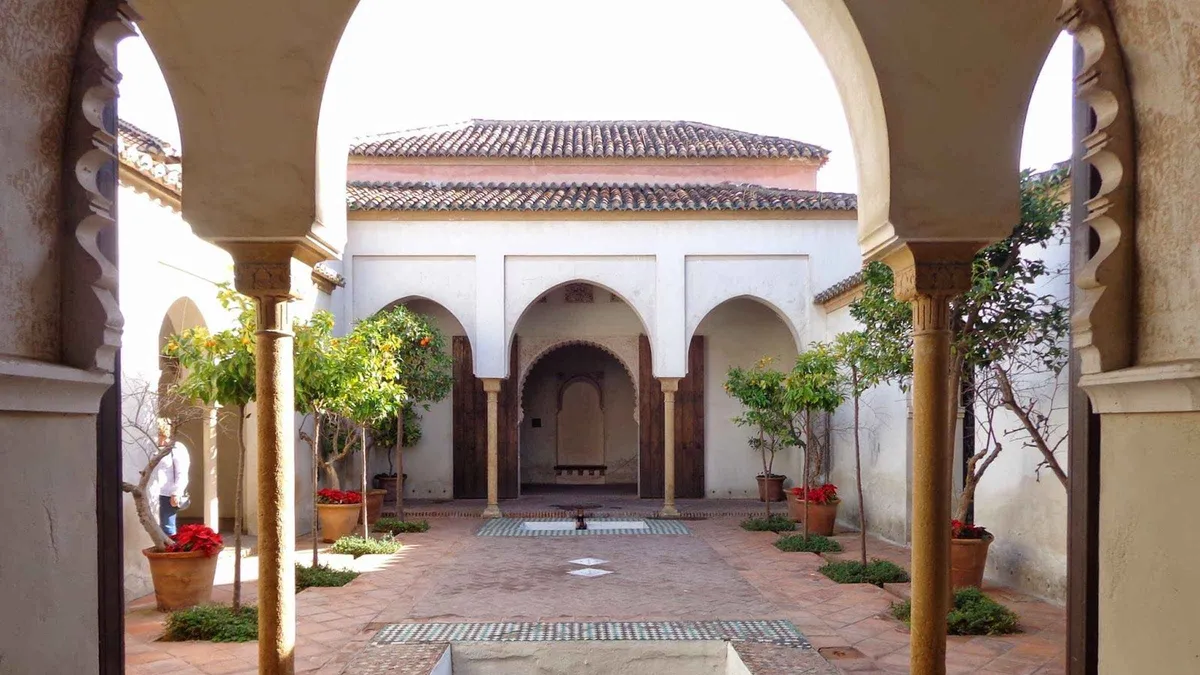
Most reviewed Malaga: Roman Theater and Alcazaba of Malaga Guided Tour
Ninety minutes with a guide across the Roman Theatre and up into the Alcazaba, both tickets included, in English or Spanish, then free time in the fortress. The operator says there is no lift on this route; the listing's highlights mistakenly mention the Cathedral and Picasso Museum, which are not visited.
Check Availability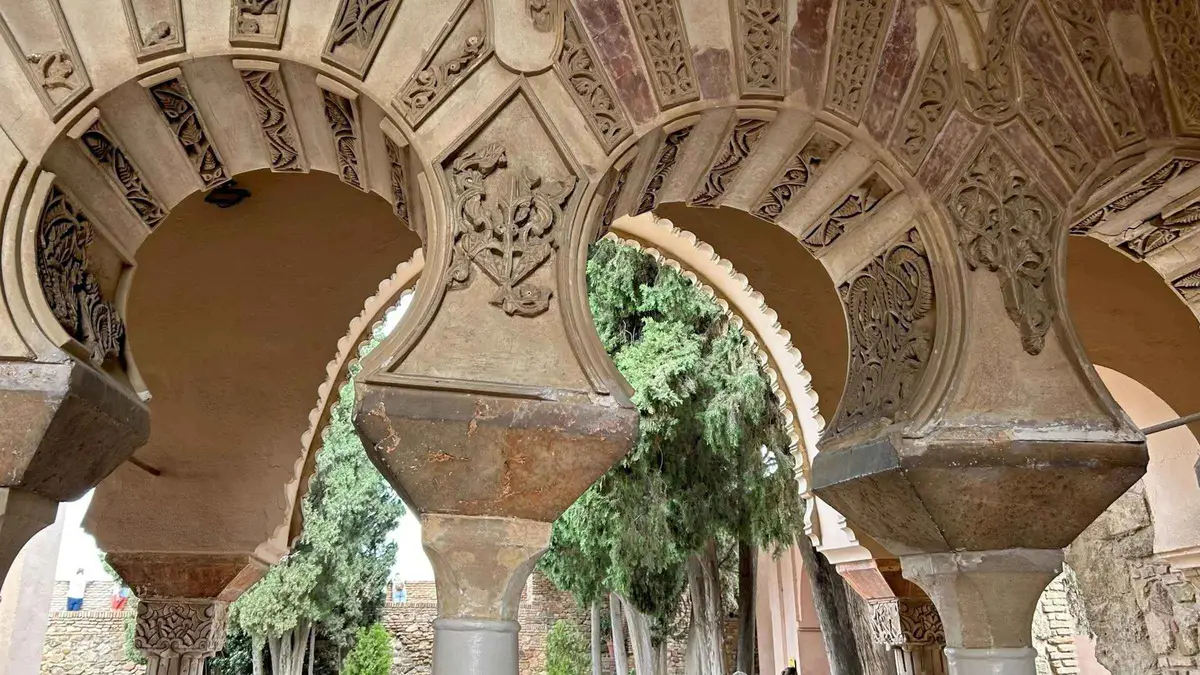 from $34.90
Alcazaba of Málaga & Roman Theatre Highlights Tour & Tickets
A story-led 90 minutes that starts at the Roman Theatre and climbs through the Alcazaba's gates and viewpoints, fortress ticket included, in English or Spanish. The route has steps and steep stretches and the operator rules out anyone with reduced mobility. Only three reviews so far.
Check AvailabilityPrices, ratings and details are the platform's own; dollar figures are the listed prices — the platform bills in your account's currency.
What the Roman Theatre Is, and How It Was Lost for Seventeen Centuries
Built under Augustus, abandoned in the third century, used as a fish-salting works and a cemetery, quarried by the emirs for the fortress above, buried under a garden and a cultural centre, and dug out between 1951 and the 1990s.
Augustus, the Baths Underneath and Two Centuries of Use
The Junta's enclave page dates the theatre to the early first century AD, in the reign of Augustus, and records that it was built partly over thermal baths of the Republican period. It followed the plan Vitruvius set down: a semicircular cavea of tiered seating cut into the slope of the hill, an orchestra floored with marble slabs, and a raised stage, the scaena, whose reconstructed front still carries traces of paint. The Spanish tourism office gives the dimensions: a radius of 31 metres, a height of 16 metres and an orchestra 15 metres across, with three tiers of seats reached through vaulted passages, the vomitoria.
It was in use for roughly two centuries and, on the Junta's account, definitively abandoned in the middle of the third century.
Salting Vats, Burials and the Alcazaba's Quarry
What happened next explains the glass pyramid on the street. The building was turned into a works for salted fish and the fish sauces of the Roman table, and from the fifth century the site was also used for burials. The salting vats found under Calle Alcazabilla are what the pyramid displays.
Under the emirs the theatre became a quarry: the Ayuntamiento's own page on the fortress says the two columns and capitals in the Alcazaba's Puerta de las Columnas came from here, and the shafts you see in the second gate on the climb are the theatre's. By the eighteenth century the whole structure was under ground and gardens.
1951, the Casa de la Cultura and the Long Excavation
The theatre was found in 1951 during landscaping work beside the Casa de la Cultura, a cultural centre that had been built on top of it. Decades of partial excavation followed with the building still standing over the stage, until the Casa de la Cultura was demolished to free the site. The World Monuments Fund puts that demolition in 1994.
In 1999 the Fund, Fundación Unicaja, Autopista del Sol and the Spanish Ministry of Culture funded conservation, with grants that restored the southern entrance, which had been judged unsafe after 1984. The Junta's page says the enclave opened to the public after full restoration. It prints no opening year, and this guide does not invent one.
The finds from the dig are in the Museo de Málaga two minutes away.
What to See: the Cavea, the Stage, the Glass Platform and the Interpretation Centre
The enclave has four parts, and two of them are on the street outside the gate.
The Glass Pyramid and the Terrace on Calle Alcazabilla
Before you go in, look down. The glass pyramid on the pavement is a viewing platform over the remains of the Roman salting vats, the industrial afterlife of the theatre, and the Junta's page names it as part of the enclave. Beside it the street terrace looks straight down into the cavea, which is why every guided walk of the city stops here whether or not it enters: from this railing you see the whole semicircle, the orchestra and the stage, and on a Monday it is the only view you get.
The tuk-tuk and bike tours treat it as a photo stop for the same reason.
Inside: the Interpretation Centre, the Seats and the Orchestra
The entrance is the modern glass building on Calle Alcazabilla, which houses the interpretation centre: a short exhibition on the theatre's construction and afterlife, with the finds explained before you step out onto the site. The route then follows the top of the cavea, the three tiers of seats and the vomitoria, down to the orchestra with its marble paving and the reconstructed stage front. The seating is the place to stop, because it gives the one view that makes sense of the place: the stage below, and the Alcazaba's walls climbing straight up behind it out of the same hillside.
Twenty to thirty minutes covers it. The Junta publishes no visit length.
Events on the Stage
The theatre is used again. Performances are staged on the reconstructed scaena, and the venue appears on event-ticketing platforms. The Junta's page does not print a season, so dates come from the city's agenda rather than from this guide.
The city's festival calendar, including the August Feria and Semana Santa, is on events in Málaga.
Roman Theatre Málaga Opening Times, the Monday Closure and the Rules
The Junta de Andalucía runs the enclave, not the Ayuntamiento, and its timetable is the opposite of the fortress above: shorter days, a closed Monday, and holidays named.
Tuesday to Saturday 10:00 to 18:00. Sundays and public holidays 10:00 to 16:00. Closed every Monday and on 1 and 6 January, 1 May and 24, 25 and 31 December, with other holidays to be checked by email. Visitors are not admitted in the last 30 minutes before closing, and access is limited by capacity for the safety of visitors and of the structure, in the Junta's words, so on a free Sunday afternoon in summer there can be a short queue at the door. No ticket exists and no booking is possible for a free visit. Guided visits are by reservation, recommended, on 951 501 115 or 671 539 212 or by email to [email protected], with no fee printed.
The two timetables on this hill trap people every week. The theatre closes at 18:00 and the Alcazaba at 20:00 in summer, so the order is theatre first. On a Sunday the theatre shuts at 16:00, two hours after the fortress goes free at 14:00, so the free-Sunday plan is theatre at 14:00 and the gate at 15:30. On a Monday the theatre is closed and the fortress is open, and the terrace above the cavea is the substitute. The Junta's Museo de Málaga two minutes away is closed on Mondays too. The city's whole Monday picture is on Sunday and Monday openings.
- Animals: only assistance dogs for people with disabilities. All other animals prohibited
- Photography and filming: the Junta's page says authorisation is required for filming. Casual photographs are taken by every visitor and nothing on site stops them
- Accessibility: the Junta publishes nothing beyond the assistance-dog rule. The route down the cavea is stepped stone
- Toilets, café, cloakroom: none listed on the official page. Calle Alcazabilla has cafés along its length
How Much Time To Give the Roman Theatre
Nothing official. These routings are ours, built from the size of the site and the two monuments it shares a gate with. Door to door means from the glass pyramid and back to it.
The theatre is the smallest of the three sites on the hill and the only free one, which is why it is the one to fit in first rather than last.
| Routing | At the theatre | Door to door | What it skips |
|---|---|---|---|
| Terrace and glass pyramid only | 5 minutes | 5 minutes | The seats, the orchestra, the interpretation centre. Works on Mondays |
| Full free visit inside | 20 to 30 minutes | About 30 minutes | Nothing at the theatre |
| Theatre, then the Alcazaba above | About 30 minutes, then 1 h 30 | About 2 hours | Gibralfaro |
| With the guided walk across both | 1 h 30 for both, then free time in the fortress | About 2 hours | Gibralfaro. The guide leaves you inside the Alcazaba |
Getting to Calle Alcazabilla
The theatre is on Calle Alcazabilla, a pedestrian street at the eastern edge of the old town, about 300 metres from the Cathedral along Calle Císter and three minutes from the Picasso Museum on Calle San Agustín. From María Zambrano station it is about 25 minutes on foot through the centre, our estimate. The two guided walks meet at the glass pyramid and at Plaza de la Aduana respectively, both within sight of the door.
EMT bus 35 to Gibralfaro passes along the Paseo del Parque two minutes below. Fares and lines are on getting around Málaga. No parking is published for the enclave and the street is closed to cars.
Roman Theatre Málaga Map: the Door, the Pyramid and the Hill Above
The entrance on Calle Alcazabilla, the glass pyramid and terrace outside it, the Alcazaba gate next door, the museum with the finds, and the castle the theatre's columns helped build.
Coordinates are the ones on each site's Wikidata item, checked against the official addresses.
Next Stop From the Roman Theatre
Three things at the door or a few minutes away, each with its own page. Walk minutes are our estimates from the published distances.
Alcazaba
The fortress built with the theatre's columns, $8.16 (€7) at the gate and free on Sunday afternoons. The Alcazaba opens two hours later than the theatre closes in summer, so it is the natural second stop.
Next doorMuseo de Málaga
The Junta's archaeology and fine-arts museum in the Aduana building, where the theatre's finds ended up, free for EU citizens and closed Mondays like the theatre. Museo de Málaga is the indoor half of the same story.
2 min walkPicasso Museum
Three minutes west on Calle San Agustín, $15.15 (€13) and free in the last two hours of every Sunday. The Picasso Museum is the afternoon most people pair with this hill.
3 min walkRoman Theatre Málaga Questions
Is the Roman Theatre in Málaga free?
Yes, for everyone, on every day it opens: the Junta de Andalucía's enclave page prints a single word, gratuito. There is no ticket, no booking and no reduced category because there is nothing to reduce. What costs money on this hill is the Alcazaba next door at $8.16 (€7), and the guided walks that pair the two are charging for the guide and that ticket. The other free sights are on free things to do in Málaga.
What are the Roman Theatre's opening times?
Tuesday to Saturday 10:00 to 18:00, Sundays and public holidays 10:00 to 16:00, closed on Mondays and on 1 and 6 January, 1 May and 24, 25 and 31 December, with no entry in the last 30 minutes. That is two hours shorter than the Alcazaba in summer and four hours shorter on a Sunday, so do the theatre first. The hours section above sets out the order.
What was the Roman Theatre in Málaga used for?
For performances, from its construction under Augustus in the early first century AD until the middle of the third, on the Junta's dating. After that it became a factory for salted fish and garum, whose vats are what the glass pyramid on Calle Alcazabilla shows, then a burial ground from the fifth century, then a quarry for the Alcazaba, whose Puerta de las Columnas is held up by two of its columns. The history section above has the sources.
How was the Roman Theatre in Málaga discovered?
By accident, in 1951, during landscaping work beside the Casa de la Cultura, a cultural centre that had been built over the buried stage. Excavation continued for decades with the building still standing, until it was demolished to free the site, in 1994 on the World Monuments Fund's account, and a 1999 conservation programme restored the southern entrance. The finds are in the Museo de Málaga two minutes away. The guided walk tells the rediscovery on the spot.
How old is the Roman Theatre in Málaga?
About two thousand years: the Junta dates it to the early first century AD, in the reign of Augustus, and it was built partly over Republican-era baths that are older still. That makes it roughly a thousand years older than the Alcazaba above it, whose present fortress was begun in the early eleventh century, and the oldest of the three sites on the hill.
Can you see the Roman Theatre on a Monday?
From above, yes. The site is closed on Mondays, but the terrace on Calle Alcazabilla beside the glass pyramid looks down over the whole cavea, orchestra and stage at any hour, and the pyramid's view of the salting vats is on the pavement. The Alcazaba next door is open on Mondays, so a Monday on this hill is fortress first and theatre from the railing. The rest of the Monday picture is on Sunday and Monday openings.
Where the Roman Theatre Fits in a Málaga Day
Be at the glass building for 10:00 on any day but Monday, spend half an hour on the seats and in the interpretation centre, and walk next door into the Alcazaba before eleven, when the guided groups arrive. The combined ticket then takes you up to Gibralfaro Castle and bus 35 brings you down for lunch. On a Sunday, start here at 14:00 and enter the fortress free from 15:30.
This is the first hour of Málaga in one day, the Picasso Museum three minutes away is the afternoon, and the trip as a whole starts from the Málaga guide homepage.
The Roman Theatre on Film: the Cavea, the Stage and the Salting Vats
Three films that show what the free visit looks like from the seats, what the archaeologists found under the street, and how the theatre sits under the fortress.
Roman Theatre of Málaga
The site from the terrace and from the seats, with the reconstructed stage and the Alcazaba walls behind it.
Video: culturacuentaDel teatro a las salazones en Málaga
An engineer's walk from the theatre to the salting vats under the glass pyramid, in Spanish, the best account of the building's afterlife.
Video: Isaac Moreno GalloTeatro Romano de Málaga, Andalucía
A short tour of the cavea and orchestra in daylight, in Spanish, useful for judging the steps down.
Video: Andalucía ViajesVideos load from YouTube only when you press play.
Prices, hours and terms are set by the venue or operator and confirmed at checkout.
We may earn a commission if you book through one of our links, at no extra cost to you. Full affiliate disclosure