 Malaga City Guide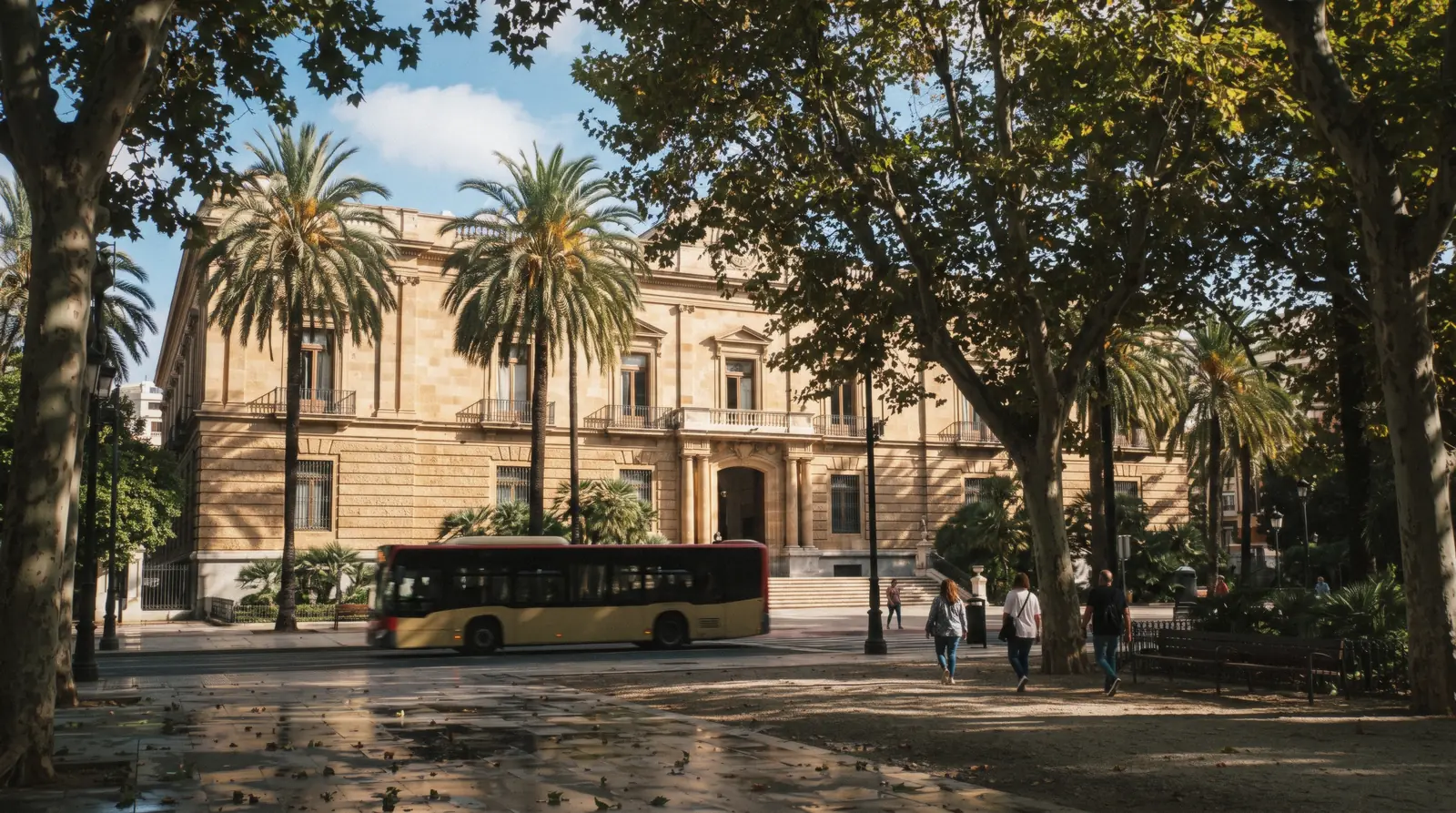
Museo de Málaga (Palacio de la Aduana)
The Museo de Málaga is the Junta de Andalucía's state museum in the Palacio de la Aduana, the neoclassical customs house between the Alcazaba and the park, open to the public since 12 December 2016 and free to accredited EU citizens, with everyone else paying $1.75 (€1.50). It holds more than 15,000 pieces across two sections that were separate museums until 1972, the Museo de Bellas Artes and the Museo Arqueológico, and it is the largest state museum in Andalusia at 18,402 square metres. This page has the hours, which run to 21:00 on five days a week, the Monday closure and its exceptions, what is on each floor, the Aduana's own story from tobacco factory to fire to museum, and the doors. The building it replaced as the fine-arts museum is now the Picasso Museum two minutes away. Every other collection in the city is on Málaga museums.
Quick answer Who pays, when it opens, what is on each floor, how it differs from the Picasso Museum
The Museo de Málaga is free for accredited EU citizens and $1.75 (€1.50) for everyone else, open Tuesday to Saturday 09:00 to 21:00 and Sundays and holidays 09:00 to 15:00, closed Mondays except when the next day is a holiday. It fills the Palacio de la Aduana with two collections, the nineteenth-century Málaga school of painting upstairs and the archaeology of the city from the Phoenicians to the Nasrids below, more than 15,000 pieces in all.
Key takeaways
- It is the evening museum: 21:00 closing five nights a week means it fits after the Alcazaba shuts at 18:00 in winter or 20:00 in summer, and the finds from the Alcazaba excavations of the 1930s and 1940s are on its archaeology floor
- The Alcazaba and Roman theatre guided tour at $14.66 is the tour that pairs with it: the theatre's finds are here, and the museum itself sells no guided visit to individuals on the pages we read. For the palace two minutes away the Picasso Museum timed ticket is the one that sells out
- Show the passport or ID at the desk: the free entry is for accredited EU citizens, so a British, American or Australian visitor pays $1.75 (€1.50), which is still the cheapest paid door in the city. The whole free-hours map is on one page
Key facts
Opening hours
| Tuesday to Saturday, all year | 09:00–21:00 |
|---|---|
| Sundays and holidays | 09:00–15:00 |
| Mondays on the eve of a holiday | 09:00–15:00 |
Closed Mondays except the eve of a holiday. 1 and 6 January, 1 May, 24, 25 and 31 December. Open on 28 February, 2 and 3 April, 15 August, 19 August, 8 September, 12 October, 1 and 2 November, 6, 7 and 8 December
Admission
- Adult
- $1.75 (€1.50) for visitors from outside the European Union
- Reduced
- Not stated. One price for non-EU visitors
- Free
- Accredited citizens of the European Union, with the passport or identity card that proves it
Planning it
- Time needed
- Not stated by the museum. Our routing: two hours for both floors, one for the fine-arts floor alone
- Book ahead
- Optional — walk-up usually fine
- Address
- Plaza de la Aduana s/n, 29015 Málaga
The one official price and the two guided cards whose subjects end up in this museum's cases, priced from museosdeandalucia.es and the platform listings read in Q3 2026. The museum sells no ticket online to individuals. The Junta's reservation platform is for groups, and the desk checks the EU document that makes entry free.
Are you an EU citizen with the document to prove it, or do you want a guide for the sites whose finds sit on the archaeology floor?
| Option | Price | Includes | Cancel | Book |
|---|---|---|---|---|
| Official entry at the deskEveryone. There is nothing to book and nothing cheaper | Free for EU citizens. $1.75 (€1.50) others | Both floors, the visitable storeroom, the courtyard | Not applicable. No advance sale to individuals | Official site |
| Alcazaba and Roman theatre guided tour with entryVisitors doing the two sites first and the museum after, when the plasterwork and the ceramics from the Alcazaba make sense | From $14.66 | Alcazaba ticket, the free theatre, a live guide | Free up to 24 hours before | Check Availability |
| Old town walk with Cathedral and Picasso Museum, 3 hoursA guided morning in the centre that ends two minutes from this door. Not for anyone with a train or ship straight after | From $63.98 | Both admissions, two guides, groups of six, English only | Free up to 24 hours before | Check Availability |
No reseller sells this museum, which is the honest measure of a door that costs nothing to an EU passport. The cards are the context, not the entry. Listed prices move with the date. Treat the card price as the one you pay only once the checkout shows it.
Guided Mornings That End Two Minutes From the Aduana
No platform sells a visit inside the Museo de Málaga. These cards cover the two timed buildings beside it, and the Alcazaba tour whose site produced the archaeology floor is on the Alcazaba page. Prices in USD as listed in Q3 2026.
 from $15.12
Most reviewed
from $15.12
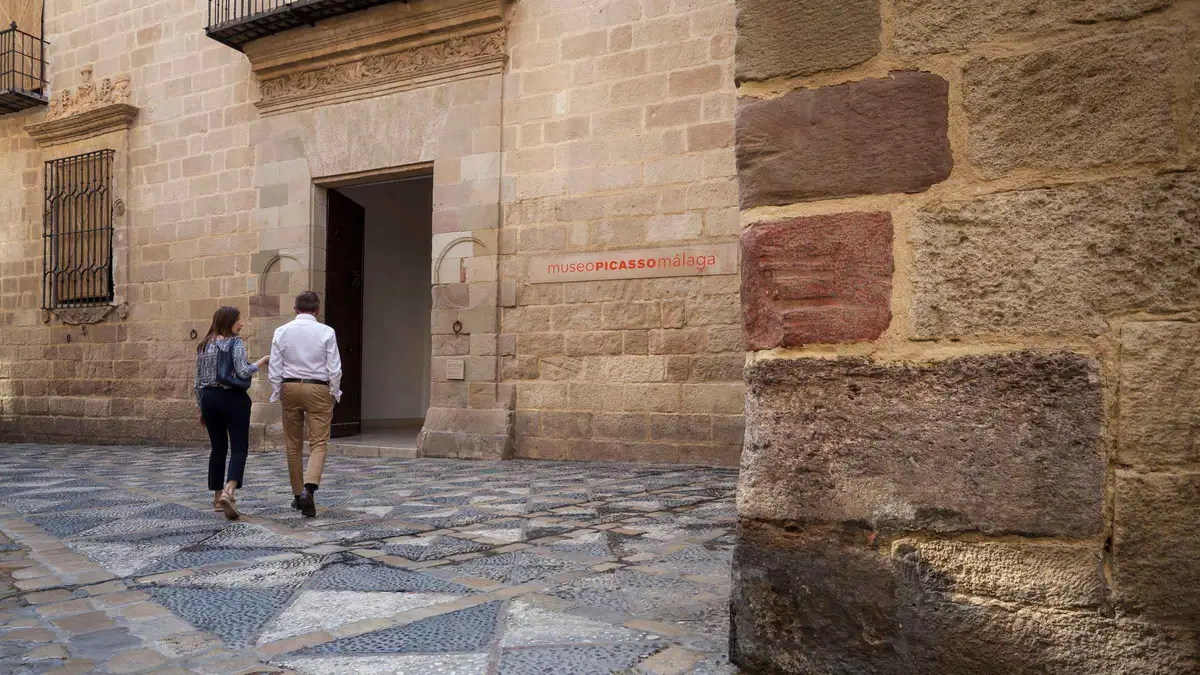
Most reviewed Málaga: Museo Picasso Málaga Entry Ticket
The museum's own timed ticket sold through GetYourGuide: full access to the 12-room permanent collection, the temporary shows, the Phoenician and Roman remains under the building, and a web-app audio guide. Scan the audio QR at the entrance or you lose it; the listing's exhibition names are out of date.
Check Availability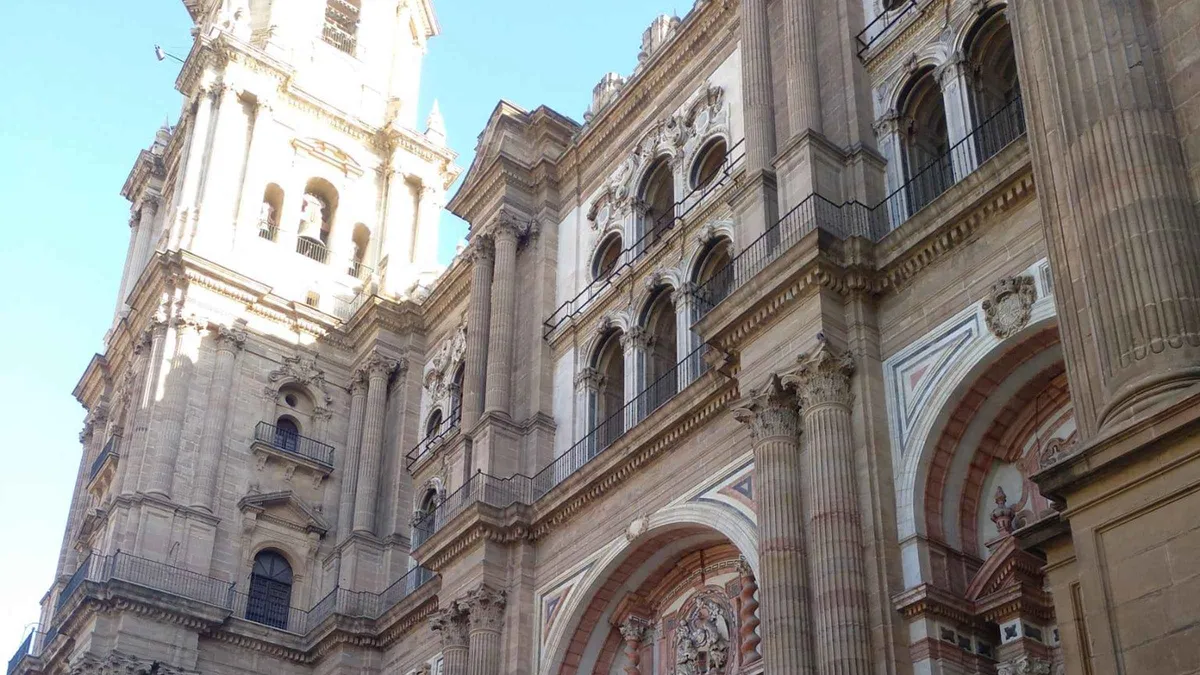 from $63.98
Malaga: Old Tour Walking Tour w/Cathedral & Picasso Museum
A three-hour English-only walk in groups of six: a historian guide for Larios, Plaza del Obispo and the Cathedral, then a second, art-specialist guide inside the Picasso Museum, both tickets included. Reviewers warn the museum half overruns, so do not book a train or ship departure straight after.
Check Availability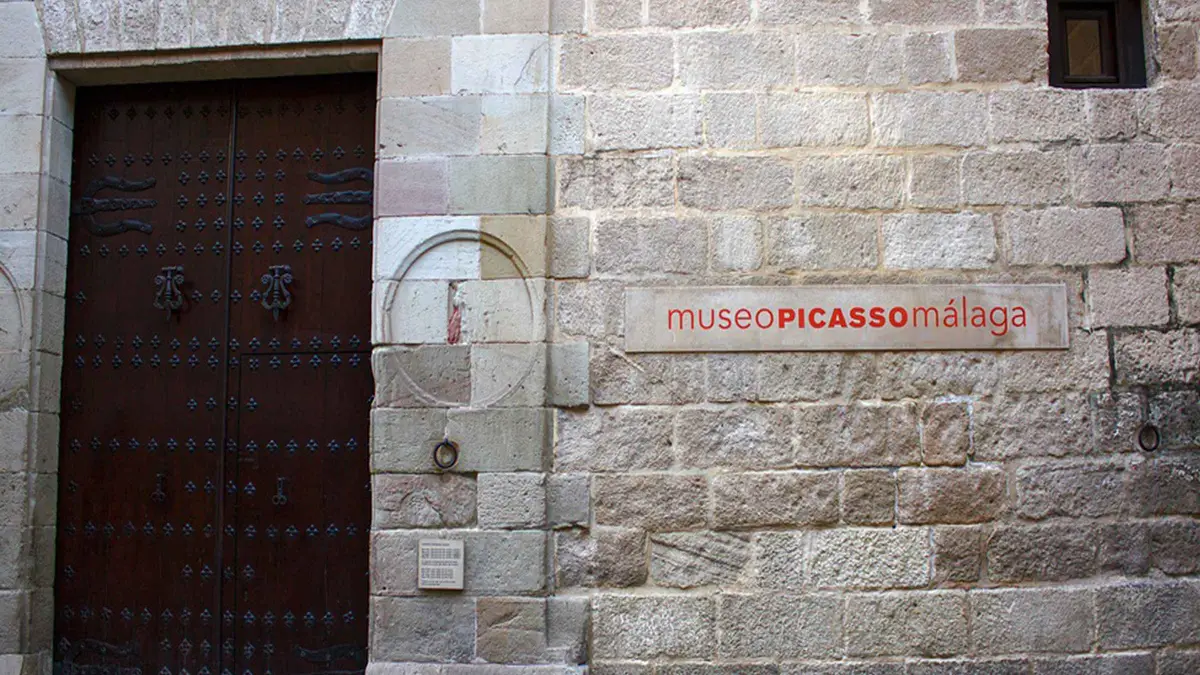 from $40.72
Top rated
from $40.72
Top rated Malaga: Picasso Museum Guided Tour with Skip-the-Line Ticket
Ninety minutes inside the Museo Picasso Málaga with a guide who walks the permanent collection chronologically, ticket included, in English or Spanish. Book the language carefully and arrive early: the operator does not refund wrong-language bookings or admit latecomers, and the museum will not let you in without a new ticket.
Check AvailabilityPrices, ratings and details are the platform's own; dollar figures are the listed prices — the platform bills in your account's currency.
What the Museo de Málaga Is: Two Museums, One Customs House
The Junta's history page is the source for every date here, and it is unusually candid about the years the museum spent without a home.
The Museo de Bellas Artes, 1913 to 1996, and the Museo Arqueológico, 1945
The Museo Provincial de Bellas Artes opened to the public in 1916 under a Royal Decree of 24 July 1913, with the Real Academia de Bellas Artes de San Telmo, founded in 1849, behind its creation. It moved from a rented building on Calle Pedro de Toledo to shared rooms with the Academia in the old Jesuit college on Plaza de la Constitución, and in the late 1950s into the Palacio de los Condes de Buenavista on Calle San Agustín, where it stayed until 1996, when that building was given to the new Museo Picasso Málaga. The Museo Arqueológico Provincial was created in 1945 from the finds of the Alcazaba's reconstruction and installed inside the fortress itself.
The two were joined under the name Museo de Málaga in 1972 by the history page, 1973 by Wikidata, and kept separate premises. Management passed to the new Junta de Andalucía in 1984 while the state kept ownership. And between 1996 and 1997 both seats closed.
For nineteen years the city's oldest museum had no building.
The Palacio de la Aduana: 1787 to 1829, a Fire in 1923, a Museum in 2016
The Aduana is a customs house of the late eighteenth century, projected in 1787 by Manuel Martín Rodríguez, nephew and pupil of Ventura Rodríguez, on the model of Sabatini's drawings for the Madrid customs house, finished by Pedro Nolasco Ventura with changes to the plans, and built between 1791 and 1829. The history page calls it the most emphatic piece of neoclassicism in Málaga. It began life as the tobacco factory, then alternated customs with administration, chiefly as the seat of the Gobierno Civil and the police, until 2008.
Royal visits by Isabel II and Alfonso XII brought alterations, and a fire in 1923 left it without a roof. In 1997 the museum took a storeroom on the third floor and an exhibition room on the ground floor, and the same year more than fifty civic groups joined a campaign under the slogan 'La Aduana para Málaga' to demand the whole building. The Spanish government and the Junta agreed in 2005.
The rehabilitation by Fernando Pardo, Bernardo García Tapia and Ángel Pérez Mora, with a new roof in a contemporary language, and the museography by Frade Arquitectos, built by Empty, produced 18,402 square metres, a visitable storeroom and a courtyard opened to the city in recognition of the campaign. The museum opened here on 12 December 2016.
What to See: The Fine-Arts Floor and the Archaeology Floor
The collections page counts more than 15,000 pieces between the two sections and lists 54 singular works. The six it puts first are the ones to find.
Bellas Artes: The Málaga School and Two Deposits From Madrid
The fine-arts section was built from three blocks: deposits from the Academia de San Telmo, deposits from the Prado and the Reina Sofía as heirs of the extinct Museo de la Trinidad and Museo Nacional de Arte Moderno, and gifts from artists and collectors, beginning with Antonio Muñoz Degrain, Rafael Murillo Carreras and José Denis Belgrano in 1916 and José Nogales Sevilla in 1935. State purchases since 1933 and the Junta's own buying since 1984, including a collection of contemporary Málaga and Andalusian art begun in 1986, fill the gaps. Among the singular works the museum names are Muñoz Degrain's La bendición del campo en 1800, La princesa de Kapurtala, the portrait of Anita Delgado, and La última ola (Naufragio).
The room of nineteenth-century Málaga painting is the one to compare with the Romantic Andalusian room at the Carmen Thyssen, whose Gómez Gil fountain was painted a few streets away.
Arqueología: From the Lex Flavia Malacitana to the Alcazaba's Plasterwork
The archaeology section descends from the Museo Loringiano, the private museum the Marqueses de Casa-Loring built at their La Concepción estate around an exceptional find of 1851 in the tile works of El Ejido: the bronze Lex Flavia Malacitana and the Lex Salpensa, the municipal laws of Roman Malaca and Salpensa. To that the Lorings added the eighteenth-century collections of the Marqués de Valdeflores and Pedro Leonardo de Villacevallos of Córdoba. The second core is the Alcazaba excavations of the 1930s and 1940s, which produced the green-and-purple ceramics, the lustreware, the cuerda seca and the series of plasterwork, stone and wood that the museum calls an exceptional collection of Hispano-Muslim archaeology.
The German Archaeological Institute's digs at the Phoenician sites of the eastern coast, Trayamar, Toscanos, Jardín and Morro de Mezquitilla, the Roman towns of Lacipo, Acinipo and Suel, the Roman theatre itself and Cerro del Villar supplied the rest, along with the rescue excavations that urban planning in the historic centre has forced since the 1980s. The singular works the museum names first are the portrait of the Emperor Antoninus Pius, the Mosaic of the Birth of Venus and the seated matrons.
The Storeroom, the Courtyard and the Roof
Two features of the 2016 rehabilitation are part of the visit. The visitable storeroom shows the reserve collection on open racks, which is where most of the 15,000 pieces live, and the courtyard of the Aduana is kept open as a public space in recognition of the 1997 campaign that won the building. The new roof, the most contemporary element of the rehabilitation, is what you see from the Alcazaba ramp above.
The Jardín Botánico La Concepción, whose owners founded the archaeological collection, is the day trip that closes the circle: the Loringiano's finds came from that estate before they came here.
Hours, the Monday Rule and the Holidays It Opens
Read on the Junta's information page in Q3 2026. The museum prints one year-round timetable with no summer and winter split, and a Monday rule with a twist.
The Museo de Málaga opens Tuesday to Saturday from 09:00 to 21:00 and on Sundays and holidays from 09:00 to 15:00. It closes on Mondays, except that a Monday which is the eve of a holiday opens with holiday hours, 09:00 to 15:00. It closes on 1 and 6 January, 1 May and 24, 25 and 31 December, and it opens on the holidays it lists: 28 February, 2 and 3 April in 2026, 15 August, the two Málaga local holidays of 19 August and 8 September, 12 October, 1 and 2 November and 6, 7 and 8 December.
Entry is free for accredited EU citizens and $1.75 (€1.50) for other nationalities, one price, no reduced category printed. The cafeteria, Bloom, keeps Tuesday to Saturday 10:00 to 20:00, Sundays and holidays 10:00 to 15:00, and follows the museum's Monday rule. The restaurant is Blossom.
The shop was temporarily closed when we read the page. The library opens to researchers by email request.
| Day | Museum | Cafeteria | Price |
|---|---|---|---|
| Tuesday to Saturday | 09:00 to 21:00 | 10:00 to 20:00 | Free EU. $1.75 (€1.50) others |
| Sundays and holidays | 09:00 to 15:00 | 10:00 to 15:00 | Free EU. $1.75 (€1.50) others |
| Monday, eve of a holiday | 09:00 to 15:00 | 10:00 to 15:00 | Free EU. $1.75 (€1.50) others |
| Other Mondays | Closed | Closed | n/a |
| 1 and 6 January, 1 May, 24, 25, 31 December | Closed | Closed | n/a |
The Quiet Slots
Our observation, not a museum figure: the museum is never full, because it is free to most of its visitors and sells no timed ticket, so the only crowded hour is a rainy Sunday morning before the 15:00 close. The evening from 19:00 to 21:00 on a weekday is the emptiest museum hour in the city. On a Monday the Picasso Museum and the Alcazaba are open and this one is not.
The Sunday and Monday openings page has the week.
Inside: Access, Café, Library, What Is Not Published
The services page lists a library open to researchers by request to [email protected], a cafeteria and a restaurant with their own sites, a shop that was closed when we read the page, and a copying and reproduction service subject to authorisation. An accessibility link exists on the Junta's site without a venue-specific statement. The building has lifts by the nature of a 2016 rehabilitation of 18,402 square metres, but the museum itself does not print that, so ask at the desk.
Audio guides, photography rules, bag rules and dogs are not stated on the pages we read. The reservation platform linked from the information page is for groups. Individuals walk in.
- Entry: desk only, EU document shown. No online sale to individuals
- Cafeteria Bloom: Tuesday to Saturday 10:00 to 20:00, Sundays and holidays 10:00 to 15:00
- Library: by email request. Shop: temporarily closed
- Audio guide, photography, bags, dogs: not stated
Eating at the Aduana
This is the one museum in the centre with a published café timetable: Bloom, Tuesday to Saturday 10:00 to 20:00 and Sundays and holidays 10:00 to 15:00, on the courtyard, with the restaurant Blossom beside it. The museum prints no prices for either, so none are given here. The courtyard is public, which means the café works as a stop between the Alcazaba and the park without a ticket.
Two minutes east is the Roman theatre and Calle Alcazabilla's bars. Ten minutes west is the Atarazanas market, open 09:00 to 13:30 on the Ayuntamiento's page. Where to eat in Málaga names the restaurants with a citable source.
How to Get There
The address is Plaza de la Aduana s/n, 29015 Málaga, the square between the foot of the Alcazaba and the Paseo del Parque. From the Picasso Museum it is two minutes down Calle Alcazabilla. From the Cathedral three minutes east.
From the cruise port twelve minutes north through the park. From María Zambrano station about 25 minutes on foot or an EMT bus to the Paseo del Parque stops at $1.63 (€1.40) a single, children to 14 free. The main door faces the square.
The courtyard is open from the same side. There is no parking on the square. getting around Málaga lists the car parks.
- Door: Plaza de la Aduana, facing the park
- From the Picasso Museum: 2 minutes. From the Cathedral: 3. From the port: 12
- Buses: Paseo del Parque stops, $1.63 (€1.40) single
- Bus 35 to Gibralfaro leaves from the park side, roughly every 30 minutes by the castle's site
Museo de Málaga Map: The Aduana and the Next Stops
The Aduana's door and the six sights within five minutes on foot. Coordinates are Wikidata P625 for each entity.
Walk minutes are our estimates from the GPS distances.
Next Stop From the Museo de Málaga
Walk minutes are our estimates from the GPS distances. The square opens onto Calle Alcazabilla and the park.
Alcazaba
The fortress whose excavations created the archaeology museum in 1945. $8.16 (€7), open every day, free Sundays from 14:00, with the lift on Calle Guillén Sotelo. The guided tour with entry covers it with the theatre. The Alcazaba has the doors and the ramp.
2 min walkRoman Theatre
Free, Tuesday to Saturday 10:00 to 18:00 and Sundays to 16:00, closed Mondays like this museum. The Roman theatre is where the museum's Roman finds were dug.
2 min walkPicasso Museum
Up Calle Alcazabilla and left into Calle San Agustín: the palace the fine-arts museum left in 1996. $15.15 (€13), open every day. Its timed ticket is the one in this neighbourhood that sells out.
2 min walkMuseo de Málaga Questions
When is the Museo de Málaga free?
Always, for accredited citizens of the European Union with the passport or identity card to show at the desk. The Junta's page prints 'Ciudadanos de la UE acreditados: gratuita'. Visitors of other nationalities pay $1.75 (€1.50) with no reduced fare printed. That makes it the one museum on the free-hours map that needs no Sunday afternoon.
What are the Museo de Málaga's opening hours?
Tuesday to Saturday 09:00 to 21:00, Sundays and holidays 09:00 to 15:00, and 09:00 to 15:00 on a Monday that is the eve of a holiday. Closed on other Mondays and on 1 and 6 January, 1 May and 24, 25 and 31 December. The 21:00 close is the latest of any museum in the centre, which is why it pairs with the Alcazaba after that closes.
How long does it take to visit the Museo de Málaga?
The museum does not state a visit length. Our routing: two hours for both floors and a look into the visitable storeroom, one hour for the fine-arts floor alone. With 15,000 pieces and 54 singular works listed, the six the museum names first, the Antoninus Pius portrait, the Venus mosaic, the seated matrons, Muñoz Degrain's Bendición del campo, the Anita Delgado portrait and La última ola, are the ones to find if you have less. The three-hour guided walk ends two minutes from the door.
Is the Museo de Bellas Artes in Málaga a separate museum?
No. The Museo de Bellas Artes, founded in 1913 and opened in 1916, was joined with the Museo Arqueológico of 1945 under the name Museo de Málaga in 1972, and both sections have shared the Palacio de la Aduana since 12 December 2016. The fine-arts collection's previous home, from the late 1950s to 1996, was the palace on Calle San Agustín that is now the Picasso Museum. The museums hub explains which building holds which name.
What is in the Palacio de la Aduana?
Both sections of the Museo de Málaga, the visitable storeroom, the public courtyard, the Bloom café and the Blossom restaurant, inside a customs house projected in 1787 by Manuel Martín Rodríguez, built between 1791 and 1829, gutted by fire in 1923, used as the Gobierno Civil and the police until 2008 and rehabilitated as 18,402 square metres of museum, the largest state museum in Andalusia. The Alcazaba above it, whose finds fill the archaeology floor, is two minutes away. Its tickets page has the combined fare with Gibralfaro.
Are there Museo de Málaga tickets to buy in advance?
No. The museum sells no ticket online to individuals. The Junta's reservation platform linked from its page is for groups. Walk in, show an EU document for free entry or pay $1.75 (€1.50) at the desk. Nothing about the visit needs booking, unlike the Picasso Museum's timed slot two minutes away. how far ahead to book Málaga lists what does.
Where the Museo de Málaga Fits in a Málaga Day
Take it in the evening. The Alcazaba shuts at 18:00 in winter and 20:00 in summer, the Picasso Museum at 18:00 to 20:00 by season, and this building stays open until 21:00 with an EU passport as the ticket, so the day's timed slots go first and the Aduana absorbs the hour after them. On a Sunday it closes at 15:00, so it is the morning before the free afternoon at the Casa Natal and the Carmen Thyssen.
The three-day Málaga itinerary gives it the second evening, the tickets index sets its free door beside every paid one, and the Málaga city guide homepage carries the whole plan.
The Museo de Málaga on Film: The Aduana, the Floors and the Storeroom
Three clips, one of them the museum's own, that show the scale of the customs house and the two floors. The visitable storeroom appears in the museum's film and in none of the others.
Museo de Málaga: Recomendaciones
The museum's own visit recommendations, useful for the route between the two sections and the storeroom.
Video: Museo de MálagaMuseo de Málaga
A regional broadcaster's film of the rehabilitated Aduana at its opening, with the courtyard and the new roof.
Video: CEDECOMStrolling through Málaga: Museum of Málaga, Art Section
A recent walk through the fine-arts floor at a visitor's pace, filmed in July 2026.
Video: PTV MálagaVideos load from YouTube only when you press play.
Prices, hours and terms are set by the venue or operator and confirmed at checkout.
We may earn a commission if you book through one of our links, at no extra cost to you. Full affiliate disclosure