 Malaga City Guide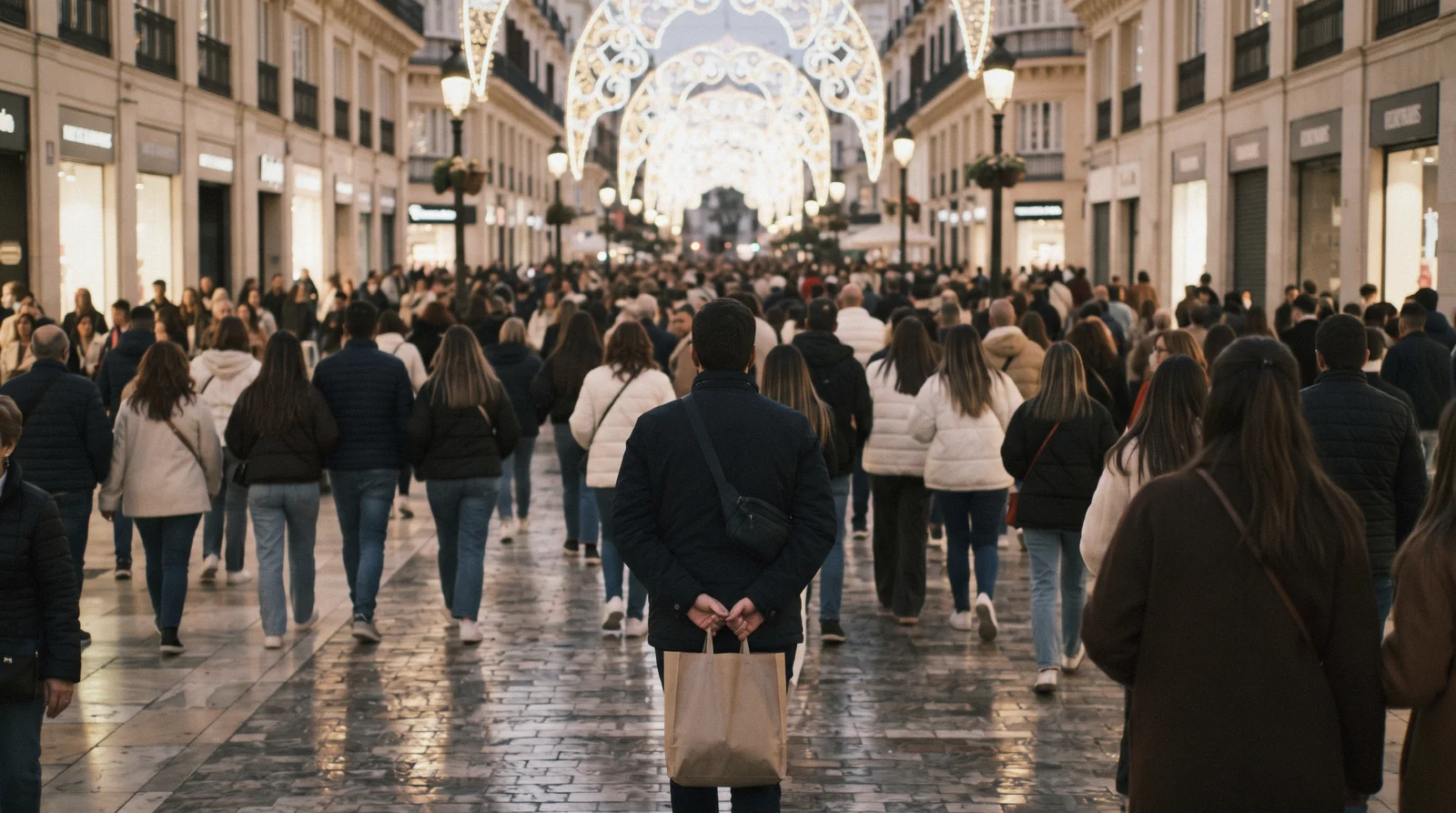
Is Málaga Safe? Pickpockets, Scams, the Police Desk and the Rules
Is Málaga safe? The honest answer is yes for the visitor who behaves as the Policía Nacional's own tourist leaflet asks, and this page is built from that leaflet rather than from a forum. Spain's national police published 'Consejos de seguridad para turistas' in 2025. It is a list of habits, not a warning, and it is reproduced here in plain English with the one Málaga-specific thing every visitor should know: the SATE desk inside the tourist office at Plaza de la Marina 11, where a foreign victim of theft can make a report in their own language and cancel cards with help. The rest of the page covers the numbers to save, the drinking-in-public rule that carries a real fine, the taxi meter, the beach season and the airport strike, and, at the end, the questions no authority answers, which we print as absent rather than guess. Getting around Málaga and the airport page carry the transport tariffs this page refers to. Every other decision of the trip, from tickets to the day trips, starts on the main Málaga guide.
Quick answer The honest answer, the police desk, the numbers, and the one fine
Yes. The risk a visitor actually runs in Málaga is a bag or phone lifted in a crowd, and the national police's 2025 tourist leaflet says how to avoid it: bag closed and in front on transport, valuables in front pockets, no distraction at cash machines. If it happens, SATE at Plaza de la Marina 11, telephone 902 999 818, takes the report in your language. Emergencies are 112. The Policía Nacional is 091 and the local police 092.
Key takeaways
- The crowds where the leaflet's advice applies are the ones you will stand in: the Alcazaba queue, the Atarazanas market aisles and the seafront on a summer evening
- Drinking in the street outside a licensed terrace is an offence in Málaga, fined up to €750 by the city ordinance. The nightlife page explains where a drink is legal
- Taxis are metered and the meter is the legal maximum under the 2026 tariff. A quoted flat fare is a negotiation you may decline, and the full table is on the transport page
- A guided first morning, such as the old town walking tour or the 24-hour hop-on bus, is the easy way to learn the streets before you carry anything through them
Is Málaga Safe? The Honest Version
This section says what can be sourced and what cannot. No official page fetched for this site publishes a crime figure for Málaga, so none is printed. What exists is national police advice and a police desk that would not be staffed with interpreters if tourists never needed it.
The Policía Nacional's tourist leaflet is addressed to visitors to the whole of Spain and its advice is about theft, not violence: it is a document about bags, pockets, cash machines, luggage and social media. Read that as a signal. The police's concern for a tourist is the property crime that follows crowds, and Málaga has crowds at exactly the places this guide sends you: the fortress queue, the museum steps, the market, the beach promenade in August, Semana Santa processions and the Feria in the third week of August.
Walking the old town at night, including alone, is normal here. The streets between Calle Larios, Plaza de la Merced and the port are lit, busy until late and lined with terraces. The city's own answer to visitor safety is the SATE desk, described below, and the leaflet, reproduced below.
Neither of them contains the word danger.
What this page cannot tell you, because nobody official publishes it: a comparative crime rate, a district-by-district risk map, an advisory for solo women, a flood risk statement, or a figure for how often the police desk is used. Every guide that prints those is inferring them. The not-stated section lists the gaps so you can weigh them yourself.
Pickpockets: What the National Police Actually Tell Tourists
Everything in this section comes from the Policía Nacional's 'Consejos de seguridad para turistas', NIPO 126-25-039-0, published in 2025 in Spanish and English and read in Q3 2026. It is the national police's own advice to visitors, and it is short.
- On public transport keep your bag closed and in front of you. In Málaga that is the C1 to the airport with luggage, the bus 35 up to the castle, and the metro at El Perchel.
- Wallet and phone go in front pockets, not back pockets or an open bag.
- At cash machines watch for anyone trying to distract you. Finish the transaction before you deal with them. The ATMs along Calle Larios and around Plaza de la Constitución are the ones a visitor uses.
- At hotel check-in keep your luggage in sight. The moment at the desk with bags on the floor behind you is a documented one.
- On social media do not post holiday plans in advance. The leaflet's concern is the empty house at home as much as the tourist abroad.
- If something happens report it at a comisaría, online at policia.es, or through SATE. Use the ALERTCOPS app to reach the police from your phone. Questions go to [email protected].
Two Málaga applications of the list. The Alcazaba queue and the Roman Theatre steps in front of it are where a crowd stands still with phones out. The timed ticket sold on the tickets page removes the queue and, with it, the standing.
And the beachfront terraces in Pedregalejo are where a bag ends up on the ground under the table. Keep it between your feet.
SATE: Where to Report a Theft in Your Own Language
The Servicio de Atención al Turista Extranjero is a Policía Nacional service with interpreters, and in Málaga it sits inside the municipal tourist office. Details from the Ayuntamiento's listing for the office and the police leaflet, read in Q3 2026.
SATE takes the report in the victim's language, helps cancel cards, contacts your consulate and, where a suspect is held, issues the summons for a fast trial. The desk is inside the Oficina Municipal de Turismo at Plaza de la Marina 11, at the town end of the port promenade, and its telephone is 902 999 818. The office itself opens daily, 09:00 to 20:00 from 1 April to 31 October and 09:00 to 18:00 from 1 November to 31 March, closed on 1 January and 25 December, on 951 926 020.
The police desk keeps the same hours by season. Bring your passport or a photo of it, and if a card was taken, the card issuer's number, because the desk will call it with you. A report from SATE is what a travel insurer asks for, and a report made online at policia.es is accepted for the same purpose.
| Number or place | What it is | When |
|---|---|---|
| 112 | EU-wide emergency number, any service, any language | 24 hours |
| 091 | Policía Nacional | 24 hours |
| 092 | Policía Local de Málaga | 24 hours |
| 902 999 818 | SATE, the tourist-victim desk at Plaza de la Marina 11 | 09:00–20:00 summer, 09:00–18:00 winter |
| 951 926 020 | Tourist office switchboard, same building | Daily. Closed 1 January and 25 December |
| 951 926 111 | Municipal lost property, including taxis | Not stated |
| ALERTCOPS | Police app with a location alert and chat | 24 hours |
| [email protected] | Policía Nacional tourist-questions mailbox | n/a |
The One Fine a Visitor Can Actually Get: Drinking in the Street
Andalusia banned the botellón, the open-air group drink, in 2006, and Málaga's own ordinance goes further. Both texts were read in Q3 2026. This is the only offence any official document prices for a visitor, so it gets its own section.
Regional law first. Ley 7/2006 of 24 October prohibits gathering to drink alcohol in public outside the zones a town hall has designated as permitted, and classes it as a minor offence carrying a warning or a fine of up to €300. The city's Ordenanza para la garantía de la convivencia ciudadana, article 23, prohibits consuming alcohol in public spaces except on the terraces of licensed establishments within their permitted hours, and separately prohibits gatherings drinking outside the areas the Ayuntamiento allows for fiestas and ferias.
Its minor offences carry a fine of up to €750. In practice: a beer on a licensed terrace is legal, a beer from a shop drunk on the beach, on a bench in Plaza de la Merced or on the Gibralfaro path is not, and the Feria's designated areas are the exception the ordinance names. The nightlife page covers where a drink is served late, and the events calendar has the Feria dates, when the centre's bars spill onto the streets under permission.
| Rule | Text | Fine for a minor offence |
|---|---|---|
| Ley 7/2006, Andalusia, art. 3.a | No gathering to drink in public outside zones the town hall permits | Warning or up to €300 |
| Ordenanza de convivencia, Málaga, art. 23.1.a | No drinking alcohol in public spaces except licensed terraces within their hours | Up to €750 |
| Ordenanza de convivencia, Málaga, art. 23.1.b | No drinking gatherings outside the areas permitted for fiestas and ferias | Up to €750 |
Taxis: The Meter Is the Maximum, and the Airport Has Its Own Minimum
The tariff that governs Málaga taxis is authorised by the Junta each February, and the 2026 resolution states in capitals that every service must be charged by the meter as the maximum price. That sentence is the whole of the taxi-scam defence: a driver who names a price higher than the meter would show is not applying a tariff, and you can insist on the meter. The figures worth knowing are the daytime flagfall of $2.19 (€1.88) and minimum of $5.37 (€4.61), the airport-origin minimums of $21.30 (€18.24) by day, $26.20 (€22.48) on nights and weekends and $30.10 (€25.80) on Friday and Saturday late nights, the $0.68 (€0.58) per suitcase, the $7.56 (€6.49) supplement for a ride to the airport, and the $11.01 (€9.45) minimum from the cruise terminal.
The Ayuntamiento also publishes orientative sheets, headed 2025, that put the airport to the centre at about €17 to €25. A meter reading in that band is correct. Everything is tabulated on getting around Málaga and the airport tariffs on the arrivals page.
No official page publishes a ride-hailing fare, so this site does not compare the apps. Lost property, taxis included, is 951 926 111.
Is Málaga Safe at Night? What Changes After Dark
Nothing official distinguishes night from day in Málaga except the transport tariffs and the drinking rule, so this section is short and specific. The centre's streets stay busy late: metro stations close between about 23:20 and 23:35 from Sunday to Thursday and about 01:50 to 02:05 on Friday and Saturday, and the bus station's side door opens for night coaches between 01:00 and 06:00. A taxi from 22:00 moves to tariff 2, and from 00:00 to 06:00 adds a $2.60 (€2.23) night supplement.
The transport page has the full table. The beach promenades are lit but the beaches themselves have no lifeguard outside the season, which the municipal ordinance sets at 15 June to 15 September with lifeguards daily from 15 June and weekends before. Fires on the sand are permitted only on the night of San Juan, from 10:00 on 23 June to 21:00 on 24 June, and on two other named dates.
Camping on the beach is prohibited. The pickpocket advice above applies with more force to the terraces at midnight than to the museum at noon, because the bag is on the floor and the phone is on the table.
Heat, Sun, Rain and the Flood Question
Searchers ask whether Málaga is safe from floods. No official page fetched for this site publishes a flood-risk statement, so what follows is the climate record, which is the one thing that can be sourced: the ERA5 reanalysis for 1995 to 2024 at the city centre, computed for this site, alongside AEMET's 1981 to 2010 normals for the airport station. Read in Q3 2026.
The record says two things. Summer is dry and hot: July and August average a daily high of 29.2°C (85°F) with 2 to 5 millimetres of rain in the month, and the risk to a visitor is the sun on the Gibralfaro path and the Alcazaba ramparts at midday, not the weather. The wet months are November and December, with 72 and 73 millimetres on average and about seven or eight rain days each.
AEMET's airport normals put both at 100 millimetres. Málaga's rain is concentrated into a few days a month rather than spread across it, which is why a November forecast of heavy rain is worth taking seriously for an outdoor day trip such as the Caminito del Rey. The weather page has every month.
| Month | Average high | Average low | Rain (ERA5) | Rain days |
|---|---|---|---|---|
| July | 29.2°C (85°F) | 22.0°C (72°F) | 2 mm | 1.3 |
| August | 29.2°C (85°F) | 22.5°C (72°F) | 5 mm | 1.9 |
| October | 22.7°C (73°F) | 16.8°C (62°F) | 55 mm | 6.3 |
| November | 18.6°C (65°F) | 12.9°C (55°F) | 72 mm | 7.1 |
| December | 16.1°C (61°F) | 10.8°C (51°F) | 73 mm | 7.6 |
Practical heat rules that follow from the numbers: the Alcazaba and the castle open at 09:00 and their last entry is an hour before closing, so the first hour is the cool one. The tap water is soft and drinkable, so carry a bottle and refill it. And the beach season's accessible bathing points and assisted bathing at La Malagueta, El Dedo and La Misericordia run from 15 June, which the beaches hub lists.
Strikes, the Airport, and Where the Official Notices Are
Spain's transport ministry publishes minimum-service resolutions for every strike on the rail network and at airports, and the aviation page carried, when we read it, an indefinite strike by the cleaning contractor at Málaga airport that began on 7 August 2026, 24 hours a day. It affects the terminal's condition, not the flights. The rail page's latest resolution was dated 28 July 2026.
Each resolution fixes the percentage of services that must run and is linked as a PDF days before the strike. For the metro and the city buses, which fall under the Junta and the Ayuntamiento, no minimum-services page could be located, and the tourist office is the place to ask. Both ministry pages are linked from getting around Málaga.
The airport page says what a rail stoppage does to the C1.
What No Authority Publishes About Málaga Safety
The related searches under this question ask about areas to avoid, solo women, floods, Muslims, living here and 'right now'. Here is what is and is not on an official page, read in Q3 2026, so the reader knows which answers on other sites are inferences.
- Areas to avoid: no official page names any. The city's tourist material, the police leaflet and the Ayuntamiento's district pages contain no such list. This site's neighbourhoods hub describes each district by what it is for, not by a risk it cannot source.
- Solo and female travellers: the police leaflet is addressed to all tourists and carries no gender-specific advice. No Málaga authority publishes one.
- Crime rate: not stated on any page fetched. Spain's interior ministry publishes crime statistics nationally. None was fetched for this page and none is inferred.
- Floods: no official flood-risk statement for the city was fetched. The climate record above is the only sourced answer.
- Right now: the state ministry's strike pages are the only official 'right now' notices this site can point to. There is no city safety bulletin.
- Religion: no official page addresses the safety of any religious group. The question is unanswerable from official sources and this site does not attempt it.
One negative finding is content in itself: the fact that Málaga's official visitor material has nothing to say about danger, and its one police service for tourists is a desk for reporting stolen wallets, is a better description of the city's risk profile than any number.
The Two Situations Worth Handing to Somebody Else
A first morning with a guide is how most visitors learn the streets before carrying anything through them, and a driven loop is how a nervous walker sees the hill. Prices in USD as listed on the platform, read in Q3 2026.
 from $34.89
Most reviewed
from $34.89
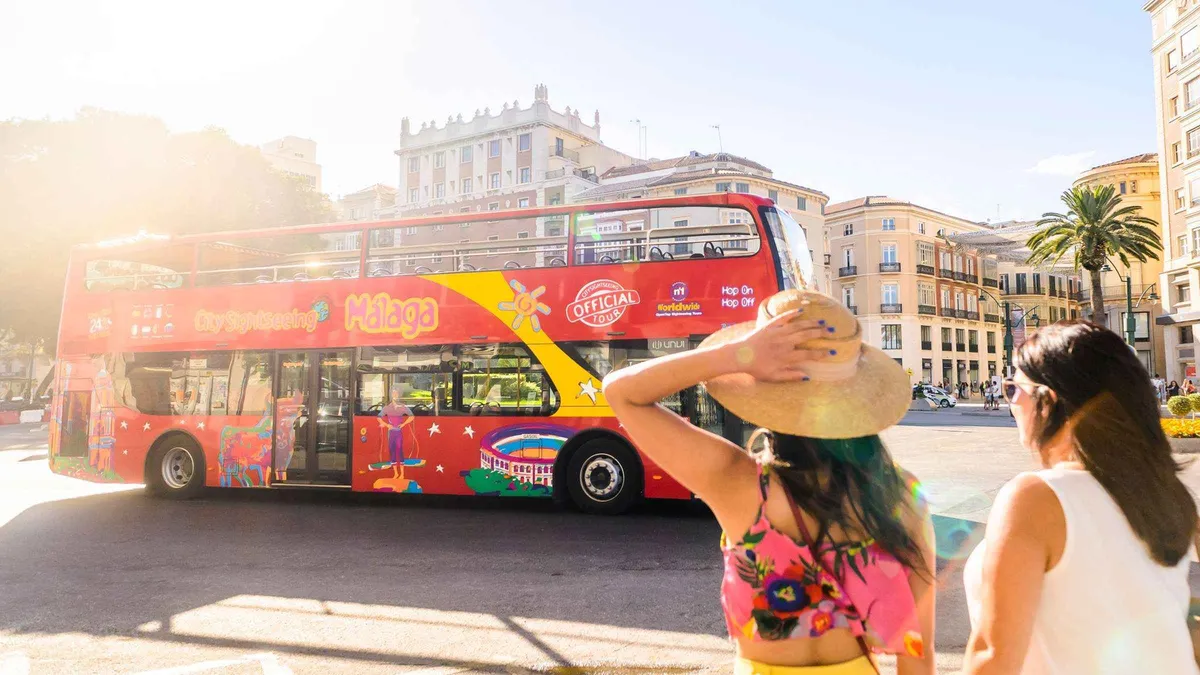
Most reviewed Malaga: City Sightseeing Hop-On Hop-Off Bus & Museum Entry
A 24-hour hop-on hop-off pass with a 14-stop Red loop that climbs to Gibralfaro Castle, an 8-language audio track, a guided walking tour and entry to the Carmen Thyssen and MIMMA museums. The Green route is a minibus with no commentary and does not run Mondays; reviewers say the audio drifts out of sync.
Check Availability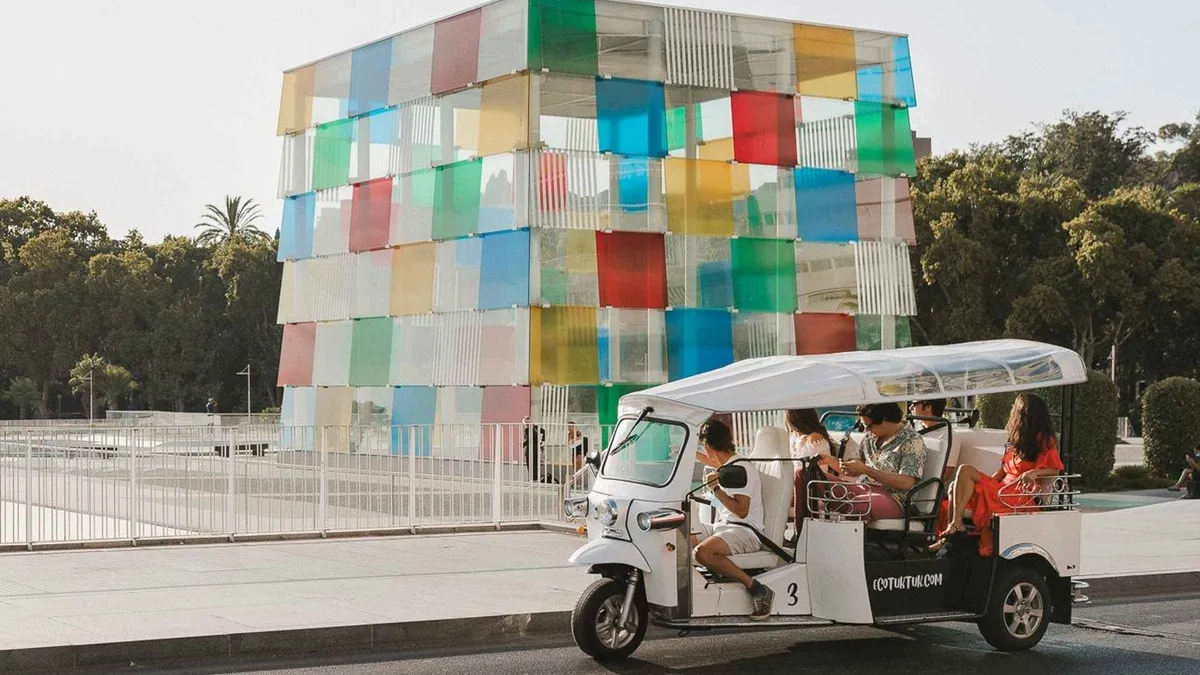 from $29.41
Top rated
from $29.41
Top rated Malaga: Private City Tour by Eco Tuk Tuk
A private one-hour loop in an electric tuk tuk for up to four people from below the Alcazaba to La Farola, Malagueta beach and the Gibralfaro viewpoint, in English or Spanish. The route is fixed by law, hotel transfers and monument entry are excluded, and arriving more than 15 minutes late forfeits the booking.
Check AvailabilityPrices, ratings and details are the platform's own; dollar figures are the listed prices — the platform bills in your account's currency.
Where to Go If Something Goes Wrong
The SATE desk, the two stations where the police leaflet's transport advice applies most, and the cruise terminal. Coordinates from the Ayuntamiento's listing, Wikidata and this site's attraction pages. Tiles by OpenStreetMap.
There is no separate tourist police station in Málaga. SATE is a desk inside the tourist office, and the comisarías are the Policía Nacional's ordinary stations.
Where to Go Next
Four pages that carry the rules this one refers to.
Getting around Málaga
Every 2026 taxi figure, the bus and metro fares and the strike notices. Getting around.
The full taxi tariffNightlife
Terraces, rooftop bars and the licensing that decides where the ordinance lets you drink. Nightlife.
Where a drink is legalTap water
EMASA's own figures on the water, which is the cheap answer to August. Tap water.
Soft and drinkableMálaga weather
The full ERA5 and AEMET record, for the heat and the November rain. Weather.
Month by monthIs Málaga Safe: Questions
Is Málaga safe for tourists?
Yes, by the only official measure available: the Policía Nacional's tourist leaflet is about bags, pockets and cash machines, not about violence, and the city's tourist-police service is a desk for reporting theft. Follow the six habits above and the risk you run is a stolen phone in a crowd.
Is Málaga safe at night?
The centre stays busy and lit until late, and nothing official distinguishes night from day beyond the taxi tariff, which moves to tariff 2 from 22:00 with a $2.60 (€2.23) supplement between 00:00 and 06:00, and the drinking-in-public rule. The night section has the metro closing times and the beach rules. The transport page has the tariff.
Are there areas to avoid in Málaga for tourists?
No official page names any, and this site does not invent a list. The pickpocket advice applies to crowded places rather than districts: the Alcazaba queue, the market aisles, the seafront terraces in summer. The neighbourhoods hub describes each district by what it offers.
Is Málaga safe for solo female travellers?
No Málaga authority publishes advice by gender, and the national police leaflet is addressed to all tourists. What can be said is that the old town's streets stay lit and busy until late, and that the SATE desk at Plaza de la Marina takes any report in your language with interpreters.
What are the emergency numbers in Málaga?
112 for any emergency, 091 for the Policía Nacional, 092 for the local police, 902 999 818 for the SATE tourist desk and 951 926 111 for lost property. They are tabulated above with hours. The Junta's own 112 pages were unavailable when checked, so the three-digit codes are reproduced from national guidance.
Can you drink alcohol on the street or the beach in Málaga?
No. Andalusia's Ley 7/2006 bans gathering to drink in public outside permitted zones, with fines up to €300, and Málaga's ordinance bans drinking in public spaces except licensed terraces, with fines up to €750. Feria areas are the exception. The rule section quotes both texts. The nightlife page says where a drink is legal.
How do I report a theft in Málaga as a tourist?
At SATE, the Policía Nacional's tourist desk inside the tourist office at Plaza de la Marina 11, which takes the report in your language, helps cancel cards and contacts your consulate, or online at policia.es, or at any comisaría. Hours and what to bring are in the reporting section.
Seeing the Approaches Before You Meet Them
Three films, one on the scams seen across Spain, one on Málaga's sights with safety in mind, and one resident's account of the city, for a sense of the streets before you walk them.
10 Biggest Tourist SCAMS in Spain
The distraction and approach patterns the police leaflet's six habits are designed against, shown on camera.
Video: Spain RevealedMálaga Safety Guide: Navigating Top Attractions with Confidence
The Alcazaba, the market and the seafront with the crowd points this page names.
Video: Vamos Academy SchoolMalaga, Spain: The Reality of Living Here (Pros, Cons & Best Areas)
A resident's view of the districts, which is the nearest thing to the areas list no authority publishes.
Video: Mari in SpainVideos load from YouTube only when you press play.
Prices, hours and terms are set by the venue or operator and confirmed at checkout.
We may earn a commission if you book through one of our links, at no extra cost to you. Full affiliate disclosure