 Malaga City Guide
Málaga in 1487: The Siege That Ended the Nasrid Port, and What Survives of It in the City
Most Málaga history that reaches a visitor is a list: Phoenicians, Romans, Moors, Picasso. One summer explains more of the city you walk through than the rest of it put together. In 1487 the Nasrid kingdom's main port, a walled city of about 15,000 people with a citadel on the hill and a castle above that, was besieged by Ferdinand and Isabella from the first week of May until 18 August, starved into surrender, and its population enslaved. The Alcazaba you queue for, the Gibralfaro you climb to, the double wall between them, the single horseshoe arch in the market façade, the cathedral standing on a mosque's foundations and the convents that became the first suburbs are all what that summer left behind. This post tells the facts in dated lines from the sources a reader can check, the English Wikipedia articles on the history of the city and on the siege, the Wikidata items for each monument, and the Ayuntamiento's own Alcazaba and Gibralfaro pages, read in Q3 2026. Where those sources disagree, and on the size of the army and the number of the enslaved they do, the disagreement is printed rather than resolved. The Alcazaba page and the Gibralfaro page have the tickets and hours. This is the reason to go.
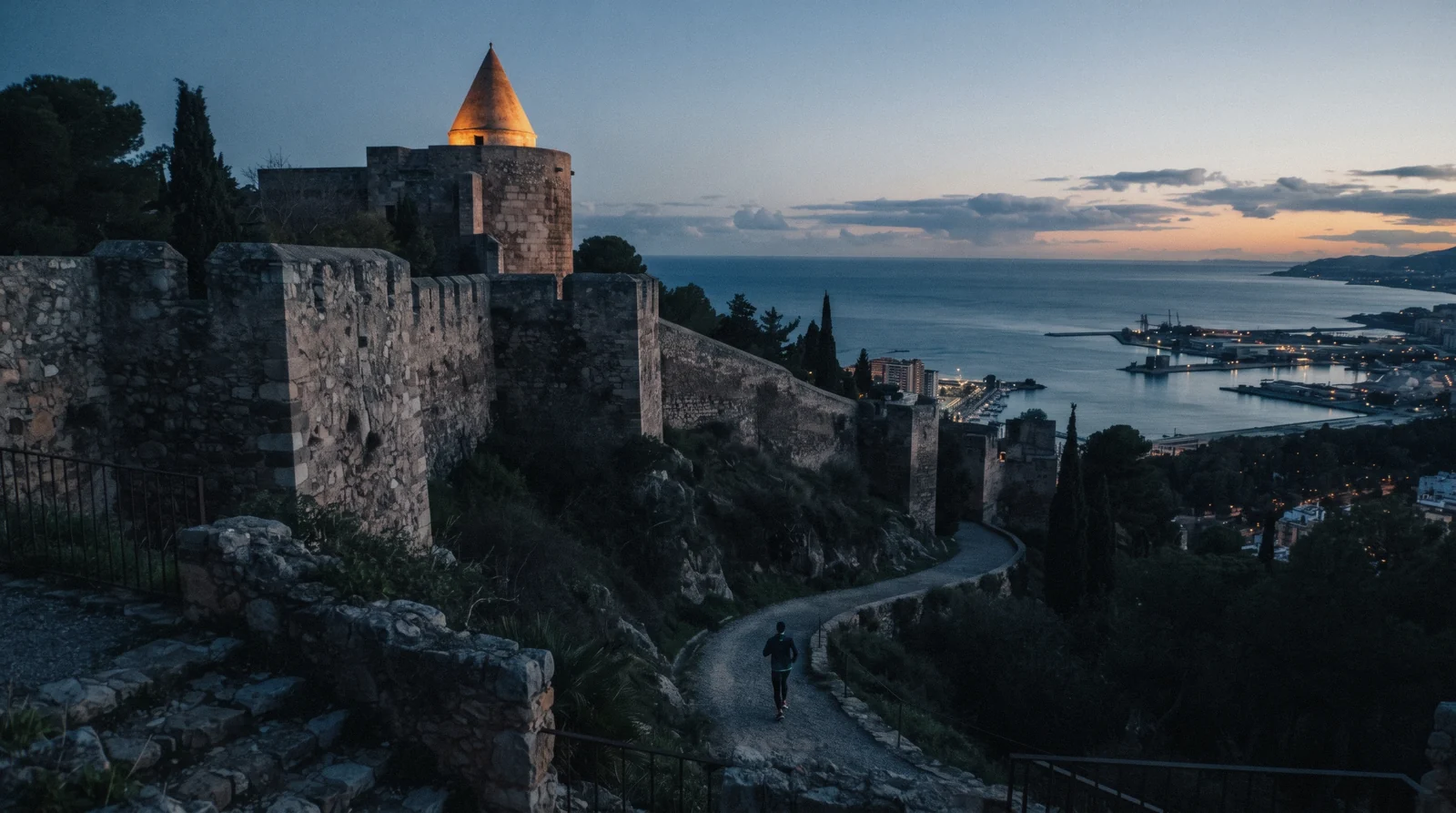
Quick answer The dates, the numbers and where to see it, in three lines
The siege of Málaga began in the first week of May 1487, when Ferdinand marched from the captured town of Vélez-Málaga, and ended on 18 August 1487, when the merchant Ali Dordux surrendered the Alcazaba. The city itself had capitulated on 13 August and the Gibralfaro garrison under Hamet el Zegrí held a day or so longer. The sources give the Castilian army as 'over 45,000' or as 20,000 horse plus 50,000 labourers and 8,000 support troops, the defenders as 15,000, and the enslaved survivors as 11,000 to 15,000, and none of those figures is settled. What survives is most of the fortress line: the Alcazaba, the Gibralfaro, the Coracha between them, stretches of wall on Calle Álamos and Carretería, and one arch of the Nasrid shipyard.
Key takeaways
- The two fortresses that held out are one ticket: the Alcazaba and Gibralfaro combined entry is $11.65 (€10) at the official shop and free for everyone on Sundays from 14:00, and the Alcazaba page explains the lift that skips the ramp.
- The cheapest guided way through the story is the Alcazaba and Roman theatre tour with entry at $13.96. The Alcazaba plus Gibralfaro tour with the official audio guide at $26.24 covers both ends of the Coracha.
- The city that grew after the surrender, the cathedral on the mosque and Calle Nueva cut to the sea gate, is the old town page's subject. The Roman theatre, free, is where the Nasrid builders took their marble from.
The Siege in Dated Lines
Dates are from the English Wikipedia articles 'History of Málaga' and 'Siege of Málaga (1487)' and from the Ayuntamiento's Alcazaba and Gibralfaro pages, read in Q3 2026. Where two sources give two dates for the same event, both are in the row. The bibliographies behind the Wikipedia articles are Prescott (1854), Bernáldez, Pulgar, Mata Carriazo (1971), Lunenfeld (1987) and Torremocha Silva (2004).
| Date | What happened | Source and caveat |
|---|---|---|
| 1239 | Muhammad I of Granada takes Málaga from the last taifa king. It becomes the Nasrid kingdom's port | History of Málaga (Wikipedia) |
| 1344 to 1354 | Yusuf I builds the Castle of Gibralfaro above the Alcazaba and the double-walled Coracha joining them. Finished under Muhammad V | Ayuntamiento Gibralfaro page. Wikipedia gives 1333 to 1354 as the reign |
| 1354 to 1391 | Muhammad V builds the Atarazanas, the shipyard at the water's edge with seven horseshoe arches | History of Málaga |
| 22 May 1485 | Ronda falls to the Catholic Monarchs. Its commander Hamet el Zegrí refuses vassalage and withdraws to Málaga | History of Málaga |
| 27 April 1487 | Vélez-Málaga capitulates. The road to Málaga is open | Siege of Málaga (Wikipedia) |
| 5, 6 or 7 May 1487 | The siege begins: 5 May in the History article, 6 May in the Alcazaba article, 7 May as the day Ferdinand left Vélez in the Siege article | Contested by a day or two across three Wikipedia articles |
| May to August 1487 | Siege towers and mines against counter-mines. The city reduced to eating dogs, cats, vine and palm leaves and hides | Siege of Málaga |
| 13 August 1487 | The city surrenders. Ferdinand refuses honourable terms | History of Málaga. The Siege article gives the same date |
| 18 August 1487 | Ali Dordux surrenders the Alcazaba after securing Mudéjar status for his group. The monarchs enter | History of Málaga. Siege article. Alcazaba article ('surrender of the city on 18 August') |
| 18 or 19 August 1487 | Gibralfaro falls: 'taken by assault' in the History article, surrendered on 19 August in the Siege article. Hamet el Zegrí executed | Contested between the two articles |
| June 1489 | The ransom process for the captives is completed | Siege of Málaga |
| 1528 to 1782 | The cathedral is built on the foundations of the mosque, and left with one tower | History of Málaga. Málaga Cathedral (Wikipedia) |
| 1610 | The moriscos who refused conversion are expelled from Málaga | History of Málaga |
| 1925 | Gibralfaro ceases to be a barracks and prison and is ceded to the Ayuntamiento | Ayuntamiento Gibralfaro page |
| 1933 to 1941 | Residents evacuated from the Alcazaba and restoration begins: Torres Balbás from 1933 (Wikipedia), Guerrero-Strachan 1937 to 1941 (Ayuntamiento) | Two sources, two names, overlapping years |
This site has not consulted the chronicles directly. The timeline is what the cited articles and official pages state, and a reader who wants the primary sources will find them in the Wikipedia bibliographies.
The City the Siege Found: Mālaqa in the Spring of 1487
Mālaqa in the 1480s was the Nasrid kingdom's maritime gateway, having taken over that role from Almería by the mid-fourteenth century, and it lived on trade. Muhammad II had signed a commercial treaty with Genoa in 1279 and the Genoese held a privileged position in the port. A ship's register kept by Filippo de Nigro in 1445 shows the city inside the network the Genoese Spinola family ran across the western Mediterranean. Its potters made the gold-lustred ceramics that Granada's kings sent as diplomatic gifts to the Mameluke sultan in Cairo, from workshops in the suburb of Fontanalla below the Ejido hill. Its shipyard, the Atarazanas built under Muhammad V, stood at the sea's edge with seven horseshoe arches through which the water came in to a basin that could hold twenty galleys, and light patrol ships were built there by Christian captives. About 15,000 people lived inside the walls, most of them Muslims, with a sizeable Jewish minority, a small Genoese colony and the captives. The governor, usually a Nasrid prince, lived in the Alcazaba with his secretaries and lawyers.
The defences were the reason the siege lasted. The walls had many towers, monumental gates and a moat, and above them stood the Alcazaba, begun by the Hammudid taifa rulers in the early eleventh century, given its entrance fortifications in the great reform of Badis of Granada after he annexed the city in 1057, and rebuilt with its palaces by the Nasrid emir Muhammad II. Above that, since Yusuf I's works of 1344 to 1354, stood the Gibralfaro, joined to the citadel by the Coracha, a corridor between two zig-zagging walls that followed the hill. Antonio de Nebrija, the grammarian, counted 110 large towers around the castle's circuit besides the small ones. The Alcazaba and the Gibralfaro had taken their final shape in 1348, the year the plague reached Europe. Wikipedia's summary is that the defences 'made the city nearly impregnable', and the summer of 1487 tested the claim.
The men who held it were not the city's own. When Ronda fell on 22 May 1485, its warden Hamet el Zegrí, a Berber chieftain, refused Ferdinand's offer of vassalage and took refuge in Málaga, and it was he, with a corps of Gomeres, the North African mercenaries Wikipedia calls 'experienced and disciplined', who led the resistance. The Alcazaba itself was commanded by Ali Dordux, a merchant, and the two commands would end the siege differently.
Three and a Half Months: How the Siege Was Fought
The Catholic Monarchs reached Vélez-Málaga on 17 April 1487 and took it on 27 April. Ferdinand left it for Málaga on 7 May by the Siege article's account, while the History of Málaga article dates the siege's beginning to 5 May and the Alcazaba article to 6 May. A day or two of disagreement over the start is the first contested figure, and it is printed here as such. The army's size is the second. The History article says the Castilian force was 'over 45,000 strong'. The Siege article says Ferdinand set out from Córdoba with 20,000 horsemen, 50,000 labourers and 8,000 support troops, which is a different kind of count, and neither article attributes its number to a named chronicle in the text this site read. The defenders are given as 15,000 'African (Maghrebi) mercenaries and Mālaqi warriors', a figure that may be the whole population under arms rather than a garrison.
The siege was a siege in the fifteenth-century sense: a blockade by land and sea to stop food and water, siege towers built to reach the walls, mines dug towards them and counter-mined from inside, and artillery under Francisco Ramírez de Madrid, whom the Siege article names as the artillery commander alongside the Marquis of Cádiz and García Fernández Manrique. Wikipedia calls it one of the longest sieges of the war for Granada. The History article gives it as six months and the Siege article as about four, and the dates in the table above, early May to 18 August, make the shorter figure the arithmetic one. Isabella joined the camp. What broke the city was hunger. By August, the Siege article records, people inside were 'eating dogs and cats, eating the leaves of vines and palms, and chewing hides'.
On 13 August the city offered to surrender and Ferdinand, the History article says, 'decided to make an example of the resistors and refused to grant them an honorable capitulation'. Ali Dordux negotiated separately for his own group, obtained Mudéjar status for twenty-five families, and on 18 August handed over the Alcazaba. The monarchs entered the same day and, by the Alcazaba article's account, 'raised their standard at the Torre del Homenaje', a sentence Wikipedia itself marks as needing a citation. The Gibralfaro under Hamet el Zegrí was the last to fall, by assault according to one article and by surrender on 19 August according to the other. Its defenders were sold as slaves and Hamet el Zegrí was executed. The port that had been the Nasrid kingdom's window on the sea was gone, and the fall of Granada itself came four and a half years later, in January 1492.
The Surrender's Price: The Numbers That Are Not Settled
What happened to the people of Málaga is the part of the story that Spanish and English accounts have argued over for five centuries, and the honest way to print it is as a range with the reasons attached. The Siege article says the population 'was condemned to slavery or death', that the survivors 'numbering from 11,000 to 15,000 excluding the foreign mercenaries' were enslaved, and that they went three ways: some sent to North Africa in exchange for Christian captives, some sold to defray the costs of the campaign, some given away as gifts. The History article says the same in a sentence: 'The civilian population was punished by enslavement or execution, with the exception of twenty-five families allowed to stay as Mudéjar converts in the Moorish compound'. The ransom process, by which captives could buy themselves out, was completed in June 1489. Jewish captives were held in a camp at Carmona and their ransom was met half from the captives' own assets. The 11,000 to 15,000 range is the only figure in either article that the text itself frames as uncertain, and it is the one that matters most, so this post repeats it as a range and does not pick a number. If the city held about 15,000 people at the siege's start and 15,000 defended it, the figures cannot all be right at once. That is a caution about fifteenth-century counting, not a resolution.
The land was then redistributed by repartimiento, the customary division of a conquered town's property among those who had served, and between 5,000 and 6,000 Christians from Extremadura, León, Castile, Galicia and the Levante were brought to repopulate the province, of whom about a thousand settled in the city, now called Málaga in Castilian. Churches and convents were founded outside the walls, La Trinidad, Los Ángeles, the Santuario de la Victoria and the Capuchin monastery, to draw the new population into new neighbourhoods. La Trinidad and El Perchel, the barrios west of the river, began that way. The mosque on the Gibralfaro was consecrated as a church of Saint Louis of Toulouse, the Ayuntamiento's page records, and the castle became a barracks and a prison, which it stayed until 1925. The twenty-five Mudéjar families kept the covenant the war's capitulations offered elsewhere: recognise the monarchs, surrender the fortresses, keep your faith and law. In the mid-sixteenth century that covenant was withdrawn and conversion forced, the converts became moriscos under suspicion, and in 1610 those who refused were expelled from Málaga.
What Survives of 1487, and Where to Stand in It
The reason to know the story is that so much of its setting is still there, and ticketed. The table runs from the top of the hill down to the sea. Prices are the official ones from each site, read in Q3 2026.
Start at the top, because the whole point of the Gibralfaro was to see the besiegers coming.
| What survives | What it was in 1487 | Where | Ticket |
|---|---|---|---|
| Castillo de Gibralfaro (Wikidata Q1049197) | Yusuf I's castle of 1344 to 1354, Hamet el Zegrí's last position. 733 m of wall, 30 sections, 8 towers, 132 m above the sea | Camino de Gibralfaro. 20 min up Paseo de Don Juan Temboury or EMT 35 | $8.16 (€7). Combined $11.65 (€10). Free Sundays from 14:00 |
| The Coracha | The double-walled corridor Yusuf I built as the castle's only access from the Alcazaba | The castle's northern slope, visible from the path | Free from outside. Inside the ticketed enclosures |
| Alcazaba (Wikidata Q3127243) | The citadel Ali Dordux surrendered on 18 August: the Puerta de la Bóveda's 11th-century horseshoe arch, the Puerta de las Columnas, the Torre del Cristo's bent entrance, the Torre del Homenaje, the Nasrid palace and the 40 m Airón well | Calle Alcazabilla 2. Lift from Calle Guillén Sotelo | $8.16 (€7). Combined $11.65 (€10). Free Sundays from 14:00 |
| Roman theatre (Wikidata Q3849447) | The quarry: its marble ashlars are visible in the corners of the Alcazaba's Albarrana tower | Calle Alcazabilla, below the citadel | Free. Tue to Sat 10:00 to 18:00, Sun 10:00 to 16:00 |
| City wall fragments | The Nasrid circuit with its many towers | Calle Álamos and Calle Carretería | Free, from the street |
| Puerta Oscura | One of the city's Nasrid gates | The gardens of the same name below the Alcazaba, off the Paseo del Parque | Free |
| The Atarazanas arch (market, Wikidata Q106989774) | The seventh of the shipyard's seven horseshoe arches, the entrance to its columned courtyard, with two shields carrying the Nasrid motto | The façade of the 1879 market on Calle Atarazanas | Free. The hall mornings, Monday to Saturday |
| The cathedral (Wikidata Q1582758) | Built 1528 to 1782 on the mosque's foundations. The site is inside a now-missing stretch of the walls | Calle Molina Lario 9 | $11.65 (€10). Free 08:30 to 09:00 daily |
| Calle Nueva and Plaza de la Constitución | The wide road the conquerors cut in the 16th century from the Plaza Mayor to the Puerta del Mar | The old town's western grid | Free |
Reading the Alcazaba as a siege
The Ayuntamiento's own page describes the citadel as two walled precincts, a lower one that keeps 'elements from the earliest period of construction' with rectangular and square towers, and an upper one that was 'the seat of government of the city'. The entrance is deliberately hard: the Puerta de la Bóveda Vaída turns under an 11th-century horseshoe arch, the Puerta de las Columnas alternates stone and brick voussoirs, and the Torre del Cristo holds 'the second bent entrance, a Taifa construction that was renovated in the Nasrid period', each bend a place where a column of attackers has to slow and turn under the walls. The dungeons are described as 'like a large inverted funnel, which made them impossible to scale'. The Airón well, 40 m into the rock to a natural vein of water, is why a blockade took months rather than weeks. The Torre del Homenaje at the top, first built in the Taifa period with a large brick arch on its eastern face, is the keep where the article says the monarchs' standard went up. The restorers 'decided to respect the ruins and simply consolidate them'. Two Nasrid palaces survive in part, and since 2003 an exhibition of the ceramics found in the Alcazaba, the lustreware trade this city was known for, fills them. The Alcazaba page has the hours, the tickets page the official shop beside the tour prices, and the Alcazaba or Gibralfaro post decides which to give the hour to if you only have one.
The Gibralfaro's page is briefer about 1487 than its walls are: it records the name as Yabal, hilltop, and Faruh, from the Greek for lighthouse, the reign of Yusuf I between 1344 and 1354 as the building date, the completion under Muhammad V 'adapted for artillery advances', and a fortified area of 21,310 square metres with an inner enclosure of 12,630. Its interpretation centre in the old gunpowder magazine opened on 29 July 1998 and presents 'the life of the Castle as a military garrison and coastal watchtower from 1487 to 1925', which is the after-life this post ends on. The wall-walk is 'protected over much of its length by battlements, topped by pyramid-shaped capstones', and from it the whole of the besiegers' ground, the plain of the Guadalmedina and the sea, is in view.
Walking the 1487 Line With a Guide
Four listings that cover the siege's ground: two combine the Roman theatre and the Alcazaba with entry, one climbs to the Gibralfaro with the official audio guide, and one is the old-town history walk. Prices in USD as listed in Q3 2026. The official combined ticket is $11.65 (€10) at the gate.
 from $13.96
Cheapest entry
from $13.96
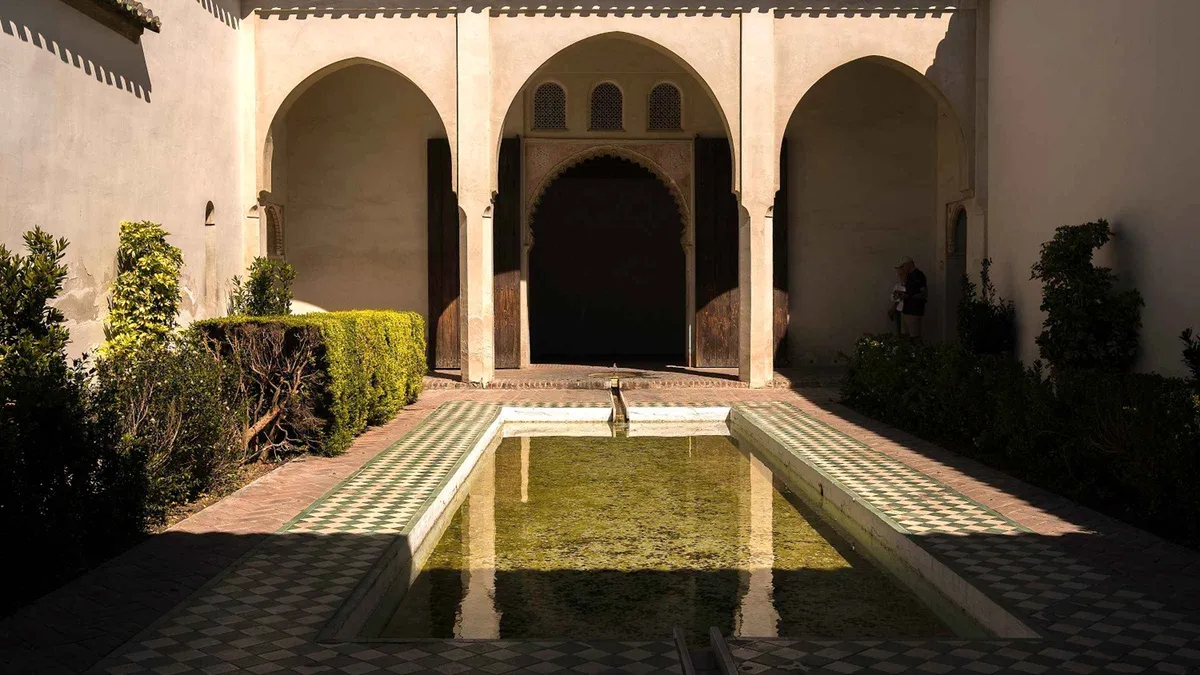
Cheapest entry Malaga: Alcazaba & Roman Theatre Tour with Entry Tickets
Ninety minutes with an official guide split evenly between the Roman Theatre and the Alcazaba, both admissions in the price, in English or Spanish. It starts and finishes at the glass pyramid on Calle Alcazabilla; late arrivals are not admitted and are not refunded.
Check Availability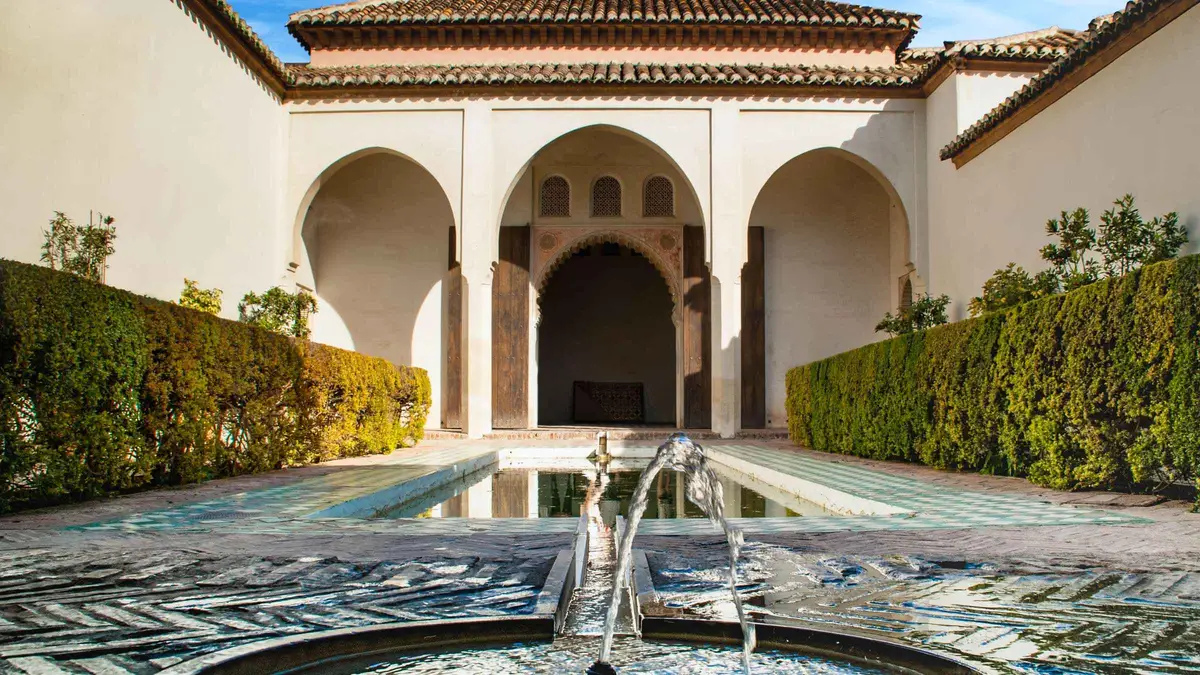 from $14.66
Most reviewed
from $14.66
Most reviewed Málaga: Alcazaba and Roman Theatre Guided Tour With Entry
A 90-minute guided walk that starts at the Roman Theatre and ends inside the Alcazaba, fortress entry included, in English, Spanish or Italian. You are left inside the Alcazaba at the end to stay as long as you like; the tour does not go up to Gibralfaro Castle.
Check Availability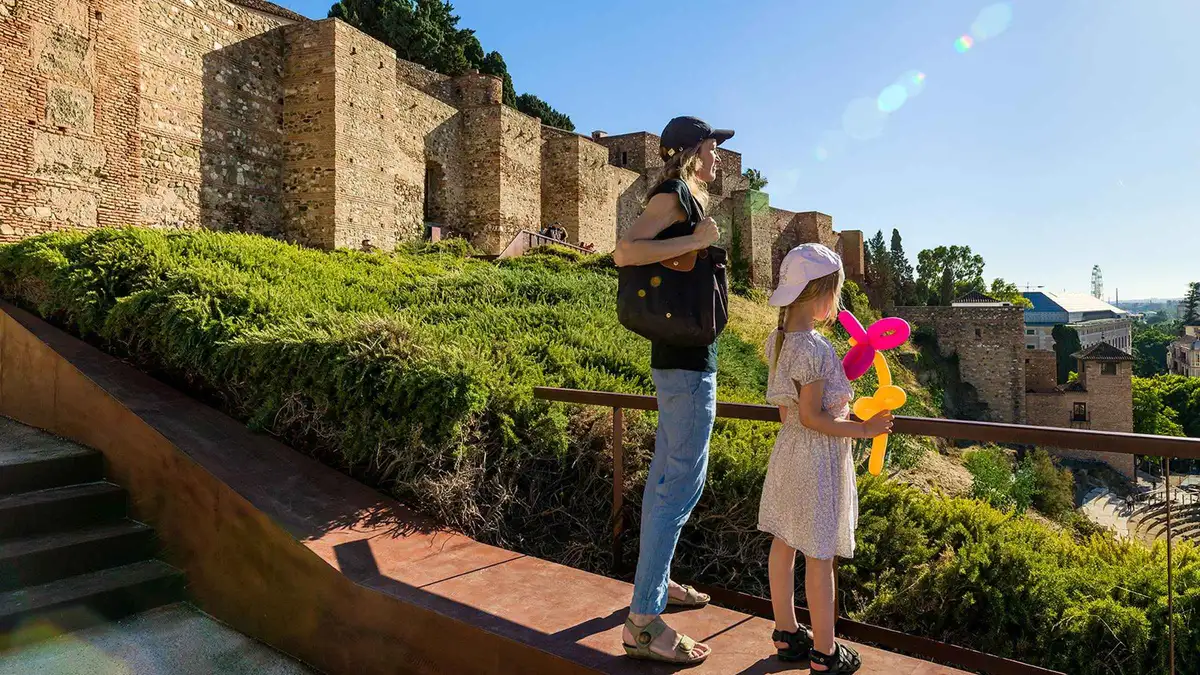 from $26.24
Malaga: Alcazaba and Castillo de Gibralfaro Tour with Official Audio Guide
A resold all-day combined ticket for the Alcazaba and Gibralfaro Castle with an audio tour; the GetYourGuide voucher is not valid for entry, the official tickets come by email the day before. No guide, no transport up the hill. One reviewer missed Gibralfaro by arriving after last entry.
Check Availability from $29.08
Top rated
from $29.08
Top rated Málaga: 2h Walking Historical Tour–Art, Culture and Legends
Two hours with an art historian from the Puerta Oscura gardens through the Roman Theatre, Plaza de la Merced, the Cathedral exterior and Plaza de la Constitución to Atarazanas Market, with a nougat-and-almond tasting on the way, in English or French. No monuments are entered; the last stop's drinks are your own.
Check AvailabilityPrices, ratings and details are the platform's own; dollar figures are the listed prices — the platform bills in your account's currency.
The Older Questions: Is Málaga the Oldest City, and What Does the Name Mean
The searches that bring people to Málaga history are broader than one siege, so briefly. Málaga is not the oldest city in the world or in Spain, but it is among the oldest continuously inhabited in western Europe: the Wikipedia history dates the first Phoenician settlement at Cerro del Villar, on an islet in the Guadalhorce estuary, to around 770 BC, and the move to the mainland colony of Malake to the eighth century BC, which is the 2,800 years the tourism copy quotes. Under Carthage from 573 BC and Rome from 218 BC it was Malaca, whose Augustan theatre the Nasrid builders later quarried.
Under Byzantium from 552, the Visigoths from 615, and from the conquest of 711 to 714 it was Mālaqa in Arabic. 'Málaga' in Spanish is simply the Castilian form of that name, taken over after 1487. What the Phoenician root meant, the origin of the name, is debated and this post does not choose an etymology.
The city is famous, to the extent a search engine measures fame, for Picasso, born at Plaza de la Merced 15 in 1881, whose birthplace museum and Picasso Museum have their own pages. For the beaches and the Costa del Sol it anchors. And for the sweet Málaga wine that the port exported from the sixteenth century, once the raisin and wine trade the Nasrids had built passed to Castilian and foreign merchants.
The homepage sets the city out for a first visit. The museums hub includes the Museo de Málaga in the Aduana, whose archaeology floor holds the Roman and Nasrid finds, free for EU citizens and $1.75 (€1.50) for everyone else.
Málaga History Questions About 1487
When was the siege of Málaga and how long did it last?
From the first week of May 1487, 5, 6 or 7 May depending on the article, to 18 August 1487, when Ali Dordux surrendered the Alcazaba. The city itself had capitulated on 13 August. That is about three and a half months, though Wikipedia's History of Málaga article rounds it to six. The dated table prints every source beside its date, and the Alcazaba page has the fortress today.
How many people were enslaved after the fall of Málaga in 1487?
The Siege of Málaga article gives 11,000 to 15,000 survivors enslaved, excluding the foreign mercenaries, and flags the figure as a range. Twenty-five families under Ali Dordux were allowed to stay as Mudéjars. The aftermath section explains why the range cannot be narrowed from the sources this post uses, and the Gibralfaro page covers the castle whose defenders were sold.
What can I still see in Málaga from the 1487 siege?
The Alcazaba, the Castle of Gibralfaro, the Coracha between them, wall fragments on Calle Álamos and Carretería, the Puerta Oscura, the surviving horseshoe arch of the Nasrid shipyard in the Atarazanas market façade and the cathedral on the mosque's foundations. The survives table gives each with its ticket. The combined Alcazaba and Gibralfaro tour at $26.24 walks both ends of the Coracha.
Who was Hamet el Zegrí and what happened to him?
The Berber warden of Ronda who refused Ferdinand's offer of vassalage when Ronda fell on 22 May 1485, withdrew to Málaga and led its defence from the Gibralfaro with a corps of Gomeres mercenaries. After the castle fell on 18 or 19 August 1487 he was executed. The siege section has the two articles' accounts, and the Gibralfaro page the walls he held.
Is the Alcazaba of Málaga older than the 1487 siege?
Much older: begun by the Hammudid taifa rulers in the early eleventh century, given its entrance works by Badis of Granada after 1057 and rebuilt with palaces by the Nasrid Muhammad II, with the Gibralfaro added above it by Yusuf I in 1344 to 1354. The what-survives section reads the gates as siege architecture, and the Alcazaba tour with entry at $13.96 is the cheapest guided way in.
What happened to Málaga's mosque after 1487?
The main mosque's site became the cathedral, built from 1528 to 1782 on its foundations and left with one tower, and the Gibralfaro's mosque was consecrated to Saint Louis of Toulouse before the castle became a barracks until 1925. The Cathedral page has the visit at $11.65 (€10) with a free window 08:30 to 09:00, and the aftermath section the convents that became the first suburbs.
Málaga History on Film
Three films: a history of the city from the Phoenicians on, a short on the fall of Málaga dated to 18 August 1487, and a documentary walk that reads the old town through its buildings.
The History of Malaga
The whole arc from Malake to the modern port, with the siege as its hinge.
Video: Eric Matthew Horne18th of August 1487: The Fall of Málaga
A short on the surrender date this post is built around.
Video: History On This Day - AncientWhy Malaga is the Unfinished Masterpiece of Southern Spain | Travel documentary 4K | Malaga Guide
A documentary walk through the city that pauses at the cathedral's missing tower and the fortress line.
Video: Ready Set WalkVideos load from YouTube only when you press play.