 Malaga City Guide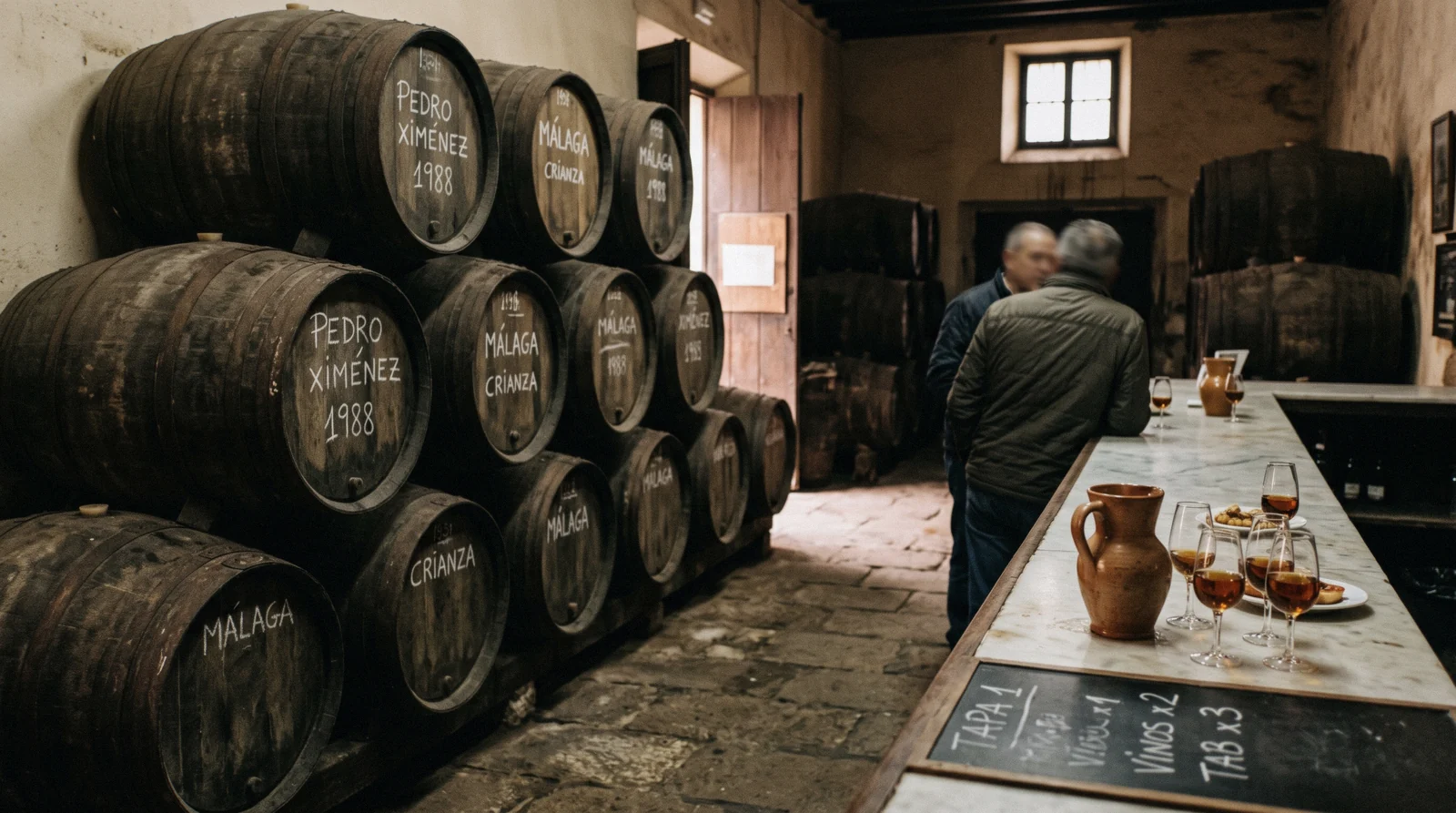
Málaga Wine: The DO Categories, the Ageing Words and Where to Taste It
Málaga wine is the sweet, fortified, oak-aged wine that made the city's name from the 16th century, when Wikipedia's history of the port records wine and raisins as its principal exports, and it is still made under a rule-book the Spanish state first protected on 13 September 1932. The rule-book is what this page is built from: the pliego de condiciones of the Denominación de Origen Málaga as filed with the Ministry of Agriculture, and the Consejo Regulador's own site at vinomalaga.com, read in Q3 2026. It defines every word on a label, from Pálido to Trasañejo, in grams of sugar per litre and years in cask, and once you can read those words a shelf of Málaga wine stops being a mystery. The second half of the page is where to drink it: the Museo del Vino in the Consejo's own building, the taberna on the Alameda that has poured it since 1840, the city winery that opens at noon on weekdays, and the estates in the Axarquía and around Ronda that publish visiting hours and prices. Where the region's guided tastings are sold through the booking platforms, the cards give the listed price beside the official alternative. For the tapas that go with it, see where to eat. For the town whose wineries most of the day tours drive to, see Ronda. Every other decision of the trip, from tickets to the day trips, starts on the Málaga guide's front page.
Quick answer What it is, what the label words mean and the cheapest tasting, in three lines
Málaga wine is a protected designation, DO Málaga, for fortified and naturally sweet wines made mainly from Pedro Ximén and Moscatel grapes and aged in oak, with a sister designation, Sierras de Málaga, for the province's unfortified dry reds, whites and rosés. The ageing words are fixed by the rule-book: Pálido is unaged, Noble is 2 to 3 years in cask, Añejo 3 to 5 and Trasañejo more than 5. The cheapest guided tasting in the city is the Museo del Vino's $8.16 (€7) ticket with two DO wines, Monday to Friday 10:00 to 17:00 and Saturday mornings.
Key takeaways
- Sweet or dry is not a yes-or-no: the DO allows a Vino de Licor Seco under 45 g/l of sugar as well as the Dulce above 45, and the category table prints the thresholds.
- The one winery inside the city, Bodegas Quitapenas on the Carretera de Guadalmar, runs a one-hour visit with three wines at $17.48 (€15), Monday to Friday at 12:00. The organic winery tour with transfer at $110.52 is the day-out version with six wines and lunch-sized tapas.
- The oldest place to drink it by the glass is Antigua Casa de Guardia on the Alameda Principal, founded 1840, open until 22:45 on Friday and Saturday. The wine and tapas walk starts at its barrels.
- Most winery day trips go to Ronda, an hour and a half away. The Ronda page has the train and bus, and this page's visits table has the prices each estate prints.
What Málaga Wine Is, in the Consejo's Own Terms
Three designations share one Consejo Regulador at Plaza de los Viñeros 1: DO Málaga, DO Sierras de Málaga and DO Pasas de Málaga. The dates and definitions here are from the Consejo's history page and the Ministry's pliego.
The word 'Málaga' was registered as a wine trademark on 16 March 1924, the DO was protected by the Estatuto del Vino on 13 September 1932, and the Consejo Regulador was constituted on 8 September 1933, which makes it one of the oldest in Spain. Sierras de Málaga was recognised on 9 January 2001 to cover the unfortified table wines the province had begun to make, and the raisin council merged in 2004. The EU registration certificate for DO Málaga is dated 22 June 2021 and the pliego in force is the version of 1 January 2019.
DO Málaga covers four product categories: vino (unfortified), vino de licor (fortified), vino de uvas sobremaduradas (overripe grapes) and vino de uvas pasificadas (raisined grapes). The preferred varieties are Pero Ximén, which is Pedro Ximénez, Moscatel de Alejandría and Moscatel Morisco, with Lairén, Doradilla and Rome authorised. The Consejo names five production zones, Axarquía, Montes de Málaga, Norte, Manilva and the Serranía de Ronda. The pliego itself names four, with the Ronda municipalities inside the zone, so this page cites the Consejo for five. Sierras de Málaga takes the whole province, makes blanco, rosado and tinto at 10 to 15.5 percent, and has one subzone, the Serranía de Ronda, where the harvest is by hand at a maximum of 9,000 kg per hectare. Pasas de Málaga are Moscatel grapes sun-dried on paseros in the Axarquía or Manilva. How many wineries there are is not stated by the Consejo with a date. Its online directory carried 46 profiles when this site counted them, and that is a count, not an official figure.
Sweet or Dry? The DO Málaga Categories by Sugar and Alcohol
The question most visitors ask, whether Málaga wine is sweet or dry, has a numerical answer in the pliego. The table is the rule-book's analytical limits. The terms under it are the styles a label may carry.
Almost everything sold as Málaga is sweet, because the grapes are sweet, the sun is used to concentrate them and most styles are fortified before the sugar is gone. But the DO defines a dry fortified category too, and a dry unfortified one, so a bottle marked Seco is not a mistake.
| Category in the pliego | Total alcohol | Acquired alcohol | Sugar, grams per litre |
|---|---|---|---|
| Vino de licor seco | at least 15% | 15 to 22% | under 45 (semiseco if over 12) |
| Vino de licor dulce | at least 17.5% | 15 to 22% | 45 or more (semidulce up to 140) |
| Vino de uvas sobremaduradas dulce | at least 16% | at least 12% | 45 or more |
| Naturalmente Dulce (overripe, unfortified) | at least 17% | at least 13% | 80 or more, from must above 300 |
| Vino de uvas pasificadas dulce | at least 18% | at least 10% | over 140 |
| Vino seco (unfortified) | at least 15% | at least 15% | under 4 |
The style words on the label
Vino Dulce Natural is fortified sweet wine from Pedro Ximén or Moscatel must that started with at least 212 g/l of sugar and fermented to at least 7 percent before the spirit went in. Maestro is the version where the must is fortified to 8 percent before fermentation begins, so it ferments very slowly and stops itself, ending at 15 to 16 percent with more than 100 g/l of sugar. Tierno comes from grapes sunned so long that the must exceeds 350 g/l, barely ferments, and is then fortified. Naturalmente Dulce is the unfortified one, must above 300 g/l and at least 13 percent acquired alcohol, from overripe Pedro Ximén or Moscatel. Pálido is a sweet wine of pale straw to pale gold, unaged and without arrope. Pajarete is a liqueur wine of 45 to 140 g/l, gold to dark amber, no arrope, aged at least two years. Lágrima is made from free-run must alone, without mechanical pressing. Aged more than two years it may be called Lacrimae Christi. The English-named styles, Dry Pale, Pale Cream, Cream and Sweet, are also in the pliego: Cream carries arrope and two years in cask, Sweet is above 140 g/l. Vendimia Asoleada names a wine from sun-dried grapes.
What it tastes like follows from the numbers rather than from adjectives: a Pálido or a Pale Cream is fresh grapey Moscatel, a Pajarete or a Cream has the toffee and dried-fruit character of oak and arrope, a Trasañejo Pedro Ximén at more than five years is dark, dense and closer to a liquid raisin. The colour scale is set by the arrope, the boiled-down must, added: Dorado has none, Rojo Dorado up to 5 percent, Oscuro 5 to 10, Color 10 to 15 and Negro 15 or more.
Pálido, Noble, Añejo, Trasañejo: The Ageing Words
The four ageing terms are the fastest way to read a Málaga label and the one thing worth memorising before a shelf. They are the pliego's, in years in oak casks of no more than 1,000 litres, by vintage or by the criaderas y soleras system.
Unlike a sherry, a Málaga wine tells you its age band on the front. The table is the whole system.
| Term | Ageing | What to expect | Where you will meet it |
|---|---|---|---|
| Pálido | None | Pale, grapey, the freshest Moscatel | Chilled, as an aperitif in the tabernas |
| Noble | 2 to 3 years in cask | Amber, first oak and dried fruit | The usual house pour by the glass |
| Añejo | 3 to 5 years in cask | Darker, toffee and raisin | Museo del Vino tastings, winery shops |
| Trasañejo | More than 5 years in cask | Dark, dense, long | The top bottles at Quitapenas and the Axarquía estates |
| Lacrimae Christi | Lágrima aged more than 2 years | Free-run must only, sweet and fine | A label to look for on a shelf |
Where to Taste Málaga Wine in the City
Four places inside the city pour the DO under their own published terms. Two of them are the cheapest wine education in Andalucía. Prices and hours are each venue's own site, read in Q3 2026.
The Museo del Vino de Málaga occupies the Consejo Regulador's building at Plaza de los Viñeros 1, north of the old town: Monday to Friday 10:00 to 17:00, Saturday 10:00 to 14:00, no Sunday listed, closed on public holidays, 1 and 6 January, 24, 25 and 31 December, Maundy Thursday and Good Friday. A general ticket is $8.16 (€7) and includes two DO tastings. Students, seniors and groups of ten or more pay $5.83 (€5) with the same two glasses.
An extra tasting is $2.91 (€2.50). A guided tour is groups-only at $69.90 (€60) on top. Booking online requires the buyer to be 18.
The site lists buses 2, 15, 17 and 20, Metro line 1 and Cercanías C-2 as the ways there. Antigua Casa de Guardia at Alameda Principal 18 was founded in 1840 and opens Monday to Thursday 10:00 to 22:00, Friday and Saturday 10:00 to 22:45 and Sunday 11:00 to 15:00. Its wines come from its own bodega at Olías, whose visits are not stated.
The story that the bill is chalked on the bar is on every blog and on none of the taberna's own pages, so it is not attributed here. Bodegas Quitapenas runs two tabernas in the centre, at Calle Marín García 4 and Calle Sánchez Pastor 2, with hours not stated on its site. Los Patios de Beatas at Calle Beatas 43 is a vinoteca and restaurant that claims more than 600 wines for sale and 50 by the glass, open September to June daily 13:00 to 17:00 and 20:00 to 24:00 and in July and August Sunday to Thursday 19:00 to 23:00, Friday and Saturday 13:30 to 15:30 and 19:00 to 23:30, with a six-course tasting menu at $93.20 (€80) and pairings at $35.00 (€30) or $69.90 (€60).
| Place | Where | Hours | Price | What you get |
|---|---|---|---|---|
| Museo del Vino de Málaga | Plaza de los Viñeros 1 | Mon to Fri 10:00 to 17:00. Sat 10:00 to 14:00 | $8.16 (€7). $5.83 (€5) reduced | The exhibition and two DO tastings. Extra glass $2.91 (€2.50) |
| Antigua Casa de Guardia | Alameda Principal 18 | Mon to Thu 10:00 to 22:00. Fri and Sat to 22:45. Sun 11:00 to 15:00 | By the glass. Prices not stated | Barrel wines from its Olías bodega, founded 1840 |
| Quitapenas tabernas | Marín García 4. Sánchez Pastor 2 | Not stated | Not stated | The city winery's own range by the glass |
| Los Patios de Beatas | Calle Beatas 43 | Sep to Jun daily 13:00 to 17:00 and 20:00 to 24:00. Jul and Aug shorter | Tasting menu $93.20 (€80). Pairing $35.00 (€30) or $69.90 (€60) | 50 wines by the glass, 600 for sale |
| Seated tasting in the Málaga Plaza centre | West of the Guadalmedina | Booked slots | Listed at $38.39 | Five Andalusian wines, a board of Ronda cured meat and Casabermeja cheese |
Which to pick
For the wine itself, the museum: $8.16 (€7) buys the two glasses and the explanation of the table above, in the building where the rules are written. For the room, Antigua Casa de Guardia, which is what the wine and tapas walks visit first. The seated tasting at $38.39 is the guided middle: five wines with food in 90 minutes, in a shopping centre rather than the old town, at a price the museum beats four times over if all you want is to taste.
Málaga Wine Tours and Tastings Compared
The three wine listings on the platform, cheapest first, with the official or DIY alternative on each card. Prices in USD as listed in Q3 2026. The winery day trips leave from the city and the tasting stays in it.
 from $38.39
Cheapest entry
from $38.39
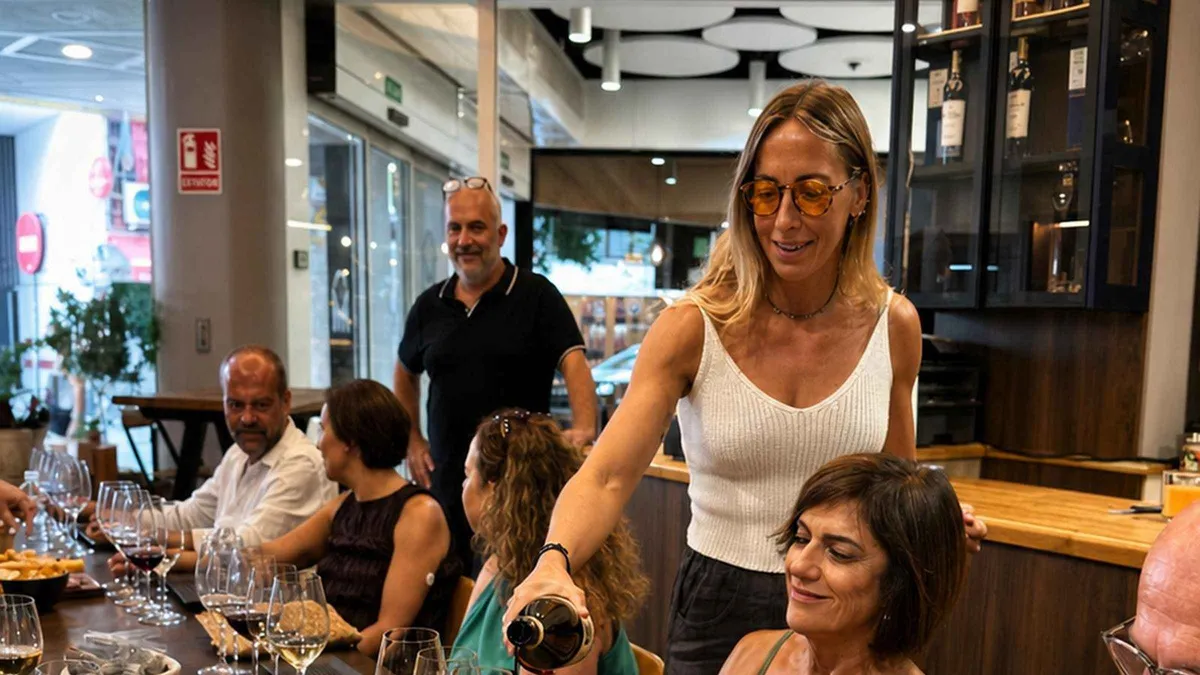
Cheapest entry Malaga: Andalusian Wine Tasting with 5 Wines & Local Bites
A 90-minute seated tasting of five Andalusian wines in a wine shop inside the Malaga Plaza shopping centre, with a board of Ronda cured meats and Casabermeja cheese. The food is an accompaniment, not a meal, and the shop sits west of the Guadalmedina rather than in the old town.
Check Availability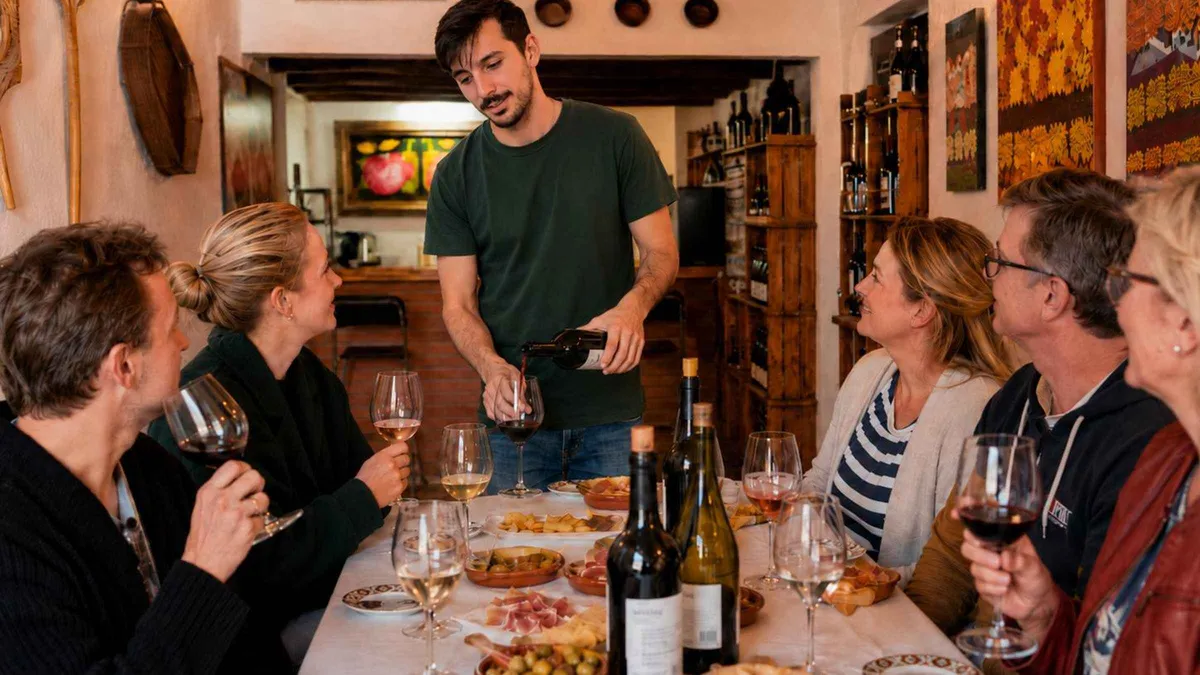 from $104.70
Malaga Wine Tour: Álora Village, Vineyard, Winery & Tapas
Five hours in Alora, a white village in the Guadalhorce valley: a guided walk to the castle, church and museum with entries paid, then a vineyard and a small family winery for four wines with tapas. Eight people maximum. It is a village and wine day, not a Caminito del Rey tour.
Check Availability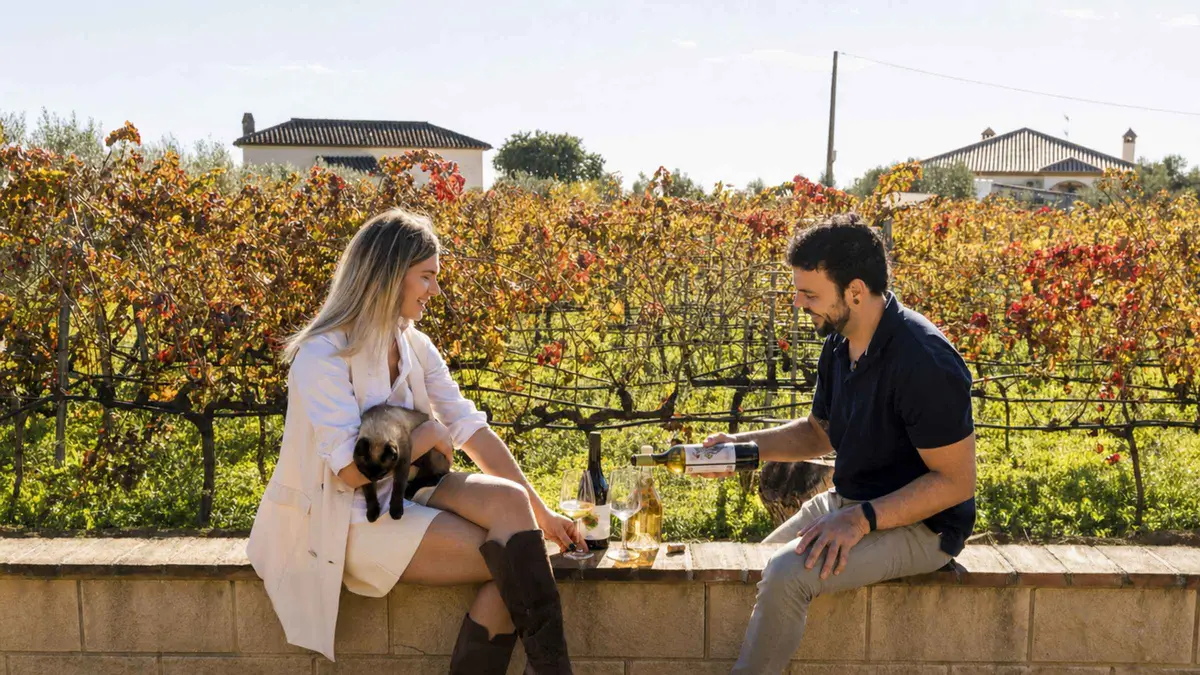 from $110.52
Most reviewed
from $110.52
Most reviewed Malaga: Organic Winery Tour with 6 Wines, Tapas & Transfer
Four and a half hours out of Plaza de la Marina to an organic vineyard, with six wines, two olive oils and a spread of local cheese, cured meat and tortilla. Groups of eight, English only, adults only. There is no hotel pickup and the winery is not named on the listing.
Check AvailabilityPrices, ratings and details are the platform's own; dollar figures are the listed prices — the platform bills in your account's currency.
Winery Visits: What Each Estate Publishes
Seven wineries in the DO publish something about visiting on their own sites. The table prints exactly that, and 'not stated' where they do not. Distances from the city are the reader's to check against the day-trips hub.
The only winery inside the municipality is Bodegas Quitapenas at Carretera de Guadalmar 12, out past the airport road. Its standard visit runs Monday to Friday at 12:00, about an hour, minimum six people, $17.48 (€15) with three wines. The same hour with aged cheese is $23.30 (€20) for a minimum of two, with Iberian ham $31.50 (€27), and the ladder runs up through a $40.80 (€35) picoteo, a $58.30 (€50) private visit for twenty adults, a $69.90 (€60) barrel tasting that includes wines of thirty years and more, and a $75.70 (€65) make-your-own-wine session.
Booking is online or by email, cancellation is free at 48 hours and charged in full inside it. Bodegas Bentomiz at Sayalonga in the Axarquía opens Wednesday to Sunday all year, tours and tastings from 12:00 at $23.30 (€20), or $16.90 (€14.50) if you stay for the lunch that runs from $70.50 (€60.50) to $112.40 (€96.50) with the tour or $53.60 (€46) to $95.50 (€82) alone. Around Ronda, Bodega Kieninger charges $52.40 (€45) a head for two or $40.80 (€35) for three or more for the full vineyard-and-cellar visit with four wines, and $40.80 (€35) or $29.10 (€25) for the tasting alone.
Bodegas Excelencia runs a 90-minute guided visit with four wines at $29.10 (€25), booked ahead. Descalzos Viejos takes visits on request with no price stated. Bodegas Dimobe at Moclinejo takes bookings only by email with at least fifteen days' notice and none at all between 1 July and 31 October.
Antigua Casa de Guardia's own bodega at Olías publishes no visits.
| Winery | Where | When | Price | Includes |
|---|---|---|---|---|
| Bodegas Quitapenas | Carretera de Guadalmar 12, Málaga | Mon to Fri 12:00. About 1 h | $17.48 (€15). $23.30 (€20) with cheese. $31.50 (€27) with ham | Guided visit, 3 wines |
| Bodegas Bentomiz | Sayalonga, Axarquía | Wed to Sun, tours from 12:00, lunch from 14:00 | $23.30 (€20). With lunch $70.50 to $112.40 (€60.50 to €96.50) | Tour and tasting. 3 to 10 courses with lunch |
| Bodega Kieninger | Los Frontones 67, Ronda | By booking calendar | $52.40 (€45) or $40.80 (€35) full. $40.80 (€35) or $29.10 (€25) tasting | 4 wines with local products |
| Bodegas Excelencia | Cordel del Puerto a El Quejigal, Ronda | By advance booking. About 90 min | $29.10 (€25) | 4 wines with aperitivos |
| Descalzos Viejos | Partido de los Molinos, Ronda | On request | Not stated | Guided visit and tasting in Spanish or English |
| Bodegas Dimobe | Moclinejo, Axarquía | By email, 15 days ahead. None 1 Jul to 31 Oct | Not stated | Bodega, vineyard and pasero visit |
| Antigua Casa de Guardia bodega | Finca El Romerillo, Olías | Not stated | Not stated | Not stated |
The platform tours against the estates
The organic winery tour with transfer, listed at $110.52, buys four and a half hours, the coach from Plaza de la Marina, six wines, two olive oils and a spread of cheese, cured meat and tortilla for a group of eight. The winery is not named on the listing. The Álora village and vineyard day at $104.70 adds a guided walk of the castle, church and museum with entries paid before a family winery with four wines and tapas.
Álora is the terminus of Cercanías C2 from María Zambrano at $4.19 (€3.60) for five zones, but the village has no winery that sells a visit on the Consejo's directory, so the DIY version is a village day without the wine. Against Quitapenas at $17.48 (€15) the platform price is the transport, the English commentary and the food. Against Bentomiz's $23.30 (€20) with a lunch to follow, a hire car and the Axarquía road are the alternative.
The Ronda page has the train and bus for reaching the Serranía estates without either.
The Five Zones and the Ruta del Vino
The Consejo divides the DO into five production areas, and a certified wine route ties eleven municipalities together for visitors.
The Axarquía, the steep coastal hills east of the city towards Nerja, is the Moscatel country and the raisin country: Sayalonga and Moclinejo, where Bentomiz and Dimobe are, and the paseros on which Pasas de Málaga are dried. The Montes de Málaga, the hills directly behind the city, were the historic Pedro Ximén slopes. The Ecomuseo Lagar de Torrijos in the natural park is an 1843 wine press farmhouse preserved as the prototype of the Montes lagar, described on the hiking page. The Norte is the Antequera plateau. Manilva is the western end of the coast, the second raisin zone. The Serranía de Ronda is the Sierras de Málaga subzone, where the province's dry reds are made and where most of the wineries that publish visits are.
The Ruta del Vino de Ronda y Málaga has been an ACEVIN-certified Ruta del Vino de España since 2013 by its own account, renewed after a November 2020 audit according to the Ayuntamiento de Ronda, and lists eleven municipalities on its homepage: Almáchar, Arriate, Cómpeta, El Borge, Fuente de Piedra, Málaga, Manilva, Moclinejo, Mollina, Ronda and Sayalonga. Its member count is not stated. It won 'Mejor Ruta del Vino por descubrir' in the 2024 Best in Class Wine Awards, a public vote. The day-trips hub and the Ronda page have the transport to the two ends of it.
Pasas de Málaga, and the Nail Polish That Borrowed the Name
Two footnotes that answer two of the searches that land here.
Pasas de Málaga are a protected designation in their own right, administered by the same Consejo: Moscatel grapes dried in the sun on paseros, the sloped drying beds, in the Axarquía or in Manilva. They are the raisin that the sweet wine is made to resemble, and a box from a market stall is the lightest thing this page can honestly recommend carrying home. The shopping page has the market hours.
A good share of the searches for 'Málaga wine' are for a shade of nail polish sold under that name by a cosmetics brand. This page is about the wine and does not review the polish. The colour is named after the wine's dark red, which the DO would call Rojo Dorado to Negro depending on the arrope.
Málaga Wine Map: The Museum, the Tabernas and the City Winery
The four city venues with published terms and the winery out by the airport road. The Axarquía and Ronda estates are off the map's edge and reached from the day-trip pages.
Positions geocoded from the addresses each venue publishes. The Quitapenas winery pin is the Carretera de Guadalmar as OpenStreetMap places it.
Where the Wine Goes Next
Four pages for the plate, the town, the hill and the bottle-carrying.
Where to eat
Michelin and Repsol lists, El Pimpi's hours and the wine-and-tapas tours from $72.24.
The tapas walks that start at the barrelsRonda
Train and bus to the town where Kieninger, Excelencia and Descalzos Viejos publish their visits.
The Serranía estates, 105 km awayHiking
The Ecomuseo Lagar de Torrijos, an 1843 wine press in the natural park behind the city.
The Montes lagar and the four park trailsShopping
When the shops open, the tax-free refund and the markets that sell Pasas de Málaga.
Sunday rules and the raisin stallsMálaga Wine Questions
What wine is Málaga known for?
The sweet, fortified, oak-aged DO Málaga wines from Pedro Ximén and Moscatel grapes, protected since 1932, and increasingly the dry Sierras de Málaga reds and whites recognised in 2001. The category table sets out the styles, and the museum tasting at $8.16 (€7) is the cheapest way to try two of them.
Is Málaga wine sweet or dry?
Mostly sweet, but the DO defines both: a Vino de Licor Seco under 45 grams of sugar per litre and an unfortified Vino Seco under 4, alongside the Dulce styles from 45 up and the raisin wines over 140. The types section has the pliego's thresholds. A seated tasting pours five styles side by side.
What do Noble, Añejo and Trasañejo mean on a Málaga wine label?
Years in oak: Noble 2 to 3, Añejo 3 to 5, Trasañejo more than 5, and Pálido none, all fixed by the DO rule-book in casks of no more than 1,000 litres. The ageing table matches each to what it tastes like, and the Quitapenas barrel tasting in the visits table reaches wines of thirty years and more.
Where can I taste Málaga wine in the city centre?
At the Museo del Vino on Plaza de los Viñeros for $8.16 (€7) with two tastings, at Antigua Casa de Guardia on the Alameda by the glass, at the two Quitapenas tabernas and at Los Patios de Beatas on Calle Beatas. The tasting table has hours and prices. The wine and tapas walk at $72.24 begins at Casa de Guardia's barrels.
Can I visit a winery from Málaga without a car?
Yes, one: Bodegas Quitapenas inside the city, Monday to Friday at 12:00, $17.48 (€15) with three wines, booked online. The Axarquía and Ronda estates in the visits table need a car, the train to Ronda, or a booked day such as the organic winery tour with transfer at $110.52.
Where is the Málaga wine region?
The whole province, in five zones the Consejo names: the Axarquía east of the city, the Montes de Málaga behind it, the Norte around Antequera, Manilva on the western coast and the Serranía de Ronda. The zones section has the certified Ruta del Vino's eleven municipalities and the day-trips hub the transport.
Málaga Wine on Film
Three films from the tabernas and the tapas bars where the wine is actually drunk, which show the barrels, the glasses and the pours the tables above can only describe.
Epic Malaga Food Tour (Best Tapas, Restaurants, Markets, & More)
The city's tapas circuit with the sweet wine poured along it, from the market to the old tabernas.
Video: Spain RevealedMalaga Wine Tasting Promo Engsh Subs
A local wine guide's tasting, with English subtitles, walking through the styles this page tables.
Video: Malaga Wine GuideWines & Tapas Tour in Malaga. Local Food. Local People. Local Places
A wines-and-tapas walk through the centre's bars, the format the platform cards above sell.
Video: Spain Food SherpasVideos load from YouTube only when you press play.
Prices, hours and terms are set by the venue or operator and confirmed at checkout.
We may earn a commission if you book through one of our links, at no extra cost to you. Full affiliate disclosure