 Malaga City Guide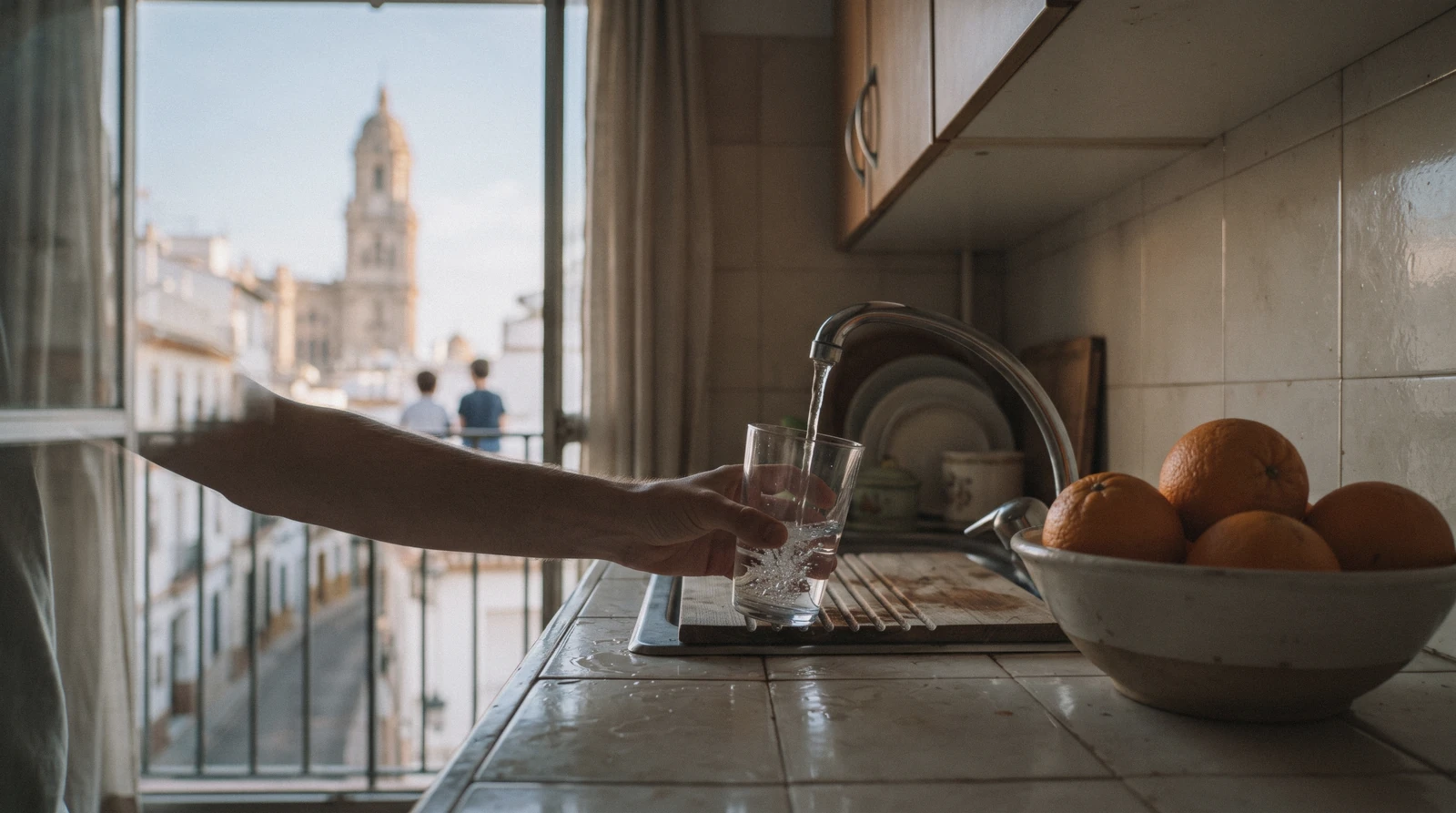
Málaga Tap Water: Can You Drink It?
Málaga tap water is safe to drink and, unusually for southern Spain, it is soft, and the source for both statements is the city's own water company rather than a forum. EMASA, the municipal utility, publishes the hardness, the treatment process, the price per litre and even the share of residents who drink it, and its own words are that the quality is as good as bottled water. This page is deliberately short. It prints EMASA's figures, explains why the water changed in 2006, says what to ask for at a restaurant table, and lists what nobody publishes: the public fountains, the neighbouring towns and the taste. The wider money picture is on what Málaga costs, and the heat that makes the bottle matter is on the weather page. Every other decision of the trip, from tickets to the day trips, starts on the whole Málaga city guide.
Quick answer Yes it is safe, why it is soft, and how to ask for it at a table
Yes. EMASA, Málaga's municipal water company, states that the tap water's quality is as good as bottled water and describes it as soft, at around 100 mg/l of calcium carbonate, since the El Atabal plant began treating the supply by reverse osmosis in 2006. It costs €0.002 a litre, and EMASA says 57 of every 100 Malagueños drink it.
Key takeaways
- Carry a bottle and refill it from any tap. On a July day at the Alcazaba ramparts or the Gibralfaro path it is the difference between a good visit and a short one
- In a restaurant, bottled water is what arrives unless you ask. The phrase is agua del grifo, and what happens next is custom rather than law
- Public drinking fountains are not listed on any official page we could read, so plan on the tap at your accommodation and the café you sit in rather than the street
- A day out of the city, such as the Caminito del Rey walkway or a three-hour bike ride to Pedregalejo, is where the refilled bottle earns its keep
What EMASA Publishes About Málaga Tap Water
Empresa Municipal de Aguas de Málaga is the city's water utility, and its website answers the visitor's question in its own words. The figures below are from its water-hardness, my-water and water-quality pages, read in Q3 2026. The analysis itself is a PDF linked from the quality page.
Two numbers matter. The hardness, which EMASA puts at around 100 mg/l of calcium carbonate, of which about 80 mg/l is calcium hardness, and which the utility itself calls soft water. And the price, €0.002 a litre, which makes a day's drinking water a rounding error on any budget.
The sentence a visitor wants is EMASA's own: the quality is as good as bottled water, and it is soft water ideal for everyday consumption.
| Measure | EMASA's figure | Where EMASA states it |
|---|---|---|
| Hardness | Around 100 mg/l CaCO3, about 80 mg/l calcium hardness; 'agua blanda' | emasa.es, what hardness does Málaga's water have |
| Treatment | Reverse osmosis at the El Atabal plant since 2006 | emasa.es, hardness page |
| Quality statement | 'As good as bottled water'. Soft and ideal for everyday consumption | emasa.es, my water |
| Price | €0.002 per litre | emasa.es, my water |
| Who drinks it | 57 of every 100 Malagueños | emasa.es, my water |
| Current analysis | PDF linked from the water-quality page | emasa.es, water quality |
| Unit note | 1 French degree of hardness = 10 mg/l | emasa.es, hardness page |
Why 2006 Matters
EMASA dates the reverse-osmosis stage at the El Atabal plant to 2006, and it is that treatment which the utility credits for today's hardness of around 100 mg/l, a figure that puts Málaga's tap water in the soft band on EMASA's own scale of one French degree per 10 mg/l. The utility publishes the 57-in-100 figure because it is campaigning for its own product against the bottle, and its pages read as an argument rather than a notice. For a visitor the consequence is practical: soft, treated water from every tap, and no reason to pay for the bottle on the table.
At the Table: Agua del Grifo, and What Happens Next
Order water in a Málaga restaurant without specifying and a bottle arrives, still or sparkling, and it is on the bill. Ask for agua del grifo and a glass or jug of tap water usually follows, without charge. No official rule on serving tap water in restaurants was found on any page fetched for this site, and this page does not claim one exists in Andalusia.
What happens is custom, and a neighbourhood bar will pour it more readily than a seafront terrace. Two things worth knowing follow from the figures above. First, the tap water is soft and reverse-osmosis treated, so the difference in the glass between it and the bottle is smaller than in most Spanish cities.
Second, at a beach chiringuito the bottle is part of the bill's logic, and asking for tap water is within your rights but will occasionally be declined. Neither reaction is a scam, and the where to eat hub explains the rest of the bill.
What Nobody Publishes: Fountains, the Coast and the Taste
The related searches under this question ask about fountains, bottled-water shops, Marbella, Nerja, Benalmádena and Fuengirola. Here is what is and is not on an official page, read in Q3 2026.
- Public drinking fountains: not stated. No municipal page fetched for this site lists the city's drinking fountains, and EMASA's pages do not map them. Fill at your accommodation, at a café or at the beach showers' taps, which are for rinsing rather than drinking and are not vouched for here.
- Marbella, Nerja, Benalmádena, Fuengirola: not stated. Each town has its own water supplier and EMASA's figures apply to Málaga city alone. This site prints nothing for the coast it could not source.
- Bottled water prices: not stated. No official price exists and supermarket prices are not a source this site uses. The Málaga costs page carries the rest of the daily budget.
- Taste: not a published parameter. EMASA's analysis PDF carries the measured values. Whether you like it is yours to judge, and the 2006 treatment is why most residents now do.
- Hotel and apartment plumbing: not stated. The water leaving EMASA's network is the utility's responsibility. The pipes inside an old building are the owner's, which is the same everywhere in Europe.
Why the Bottle Matters Here More Than in Most Cities
July and August in Málaga average a daily high of 29.2°C (85°F) with almost no rain, by the ERA5 record for 1995 to 2024 computed for this site, and June and September are not far behind at 26.5°C (80°F) and 26.0°C (79°F). The sights that fill a day here are outdoors and uphill: the Alcazaba's ramparts, the path to Gibralfaro, the beach promenade to Pedregalejo. A half-litre bottle refilled at breakfast and again at lunch is the cheapest piece of planning in this guide, and the softness of the water means it is pleasant to drink straight from the tap rather than a chore.
The full monthly record is on the weather page, and the safety page has the rest of the heat advice.
The Days When a Refilled Bottle Earns Its Keep
Two outdoor bookings from this site's catalogue, the flat three-hour bike ride along the seafront and the e-bike loop over the castle hill, both of them hours in the sun with no shop between stops. Prices in USD as listed, read in Q3 2026.
 from $37.81
Malaga Bike Tour - Town, Marina & Beach
A three-hour flat bike ride from Plaza de la Marina through the Alameda and El Perchel, along the port to La Malagueta and out on the promenade to the fishing quarter of Pedregalejo, in English, Dutch or German. Frequent stops, no hills, no museums entered; the operator says all ages.
Check Availability from $49.44
Top rated
from $49.44
Top rated Malaga E-Bike Tour: Castle Hill, center and beach
Three hours on an electric bike over the Gibralfaro hill to the viewpoint below the Parador, then down to the beach promenade, Hotel Miramar and Muelle Uno, in English, Dutch or German. Riders must be 16 or over, at least 160 cm and under 104 kg; the Pedregalejo stop is temporarily off the route.
Check AvailabilityPrices, ratings and details are the platform's own; dollar figures are the listed prices — the platform bills in your account's currency.
Where to Go Next
Three pages this one leans on.
What Málaga costs
The daily budget, the no-tourist-tax finding and the tickets that cost real money. Málaga costs.
The €0.002 lineMálaga weather
Thirty-year monthly averages, including the 29°C summer that makes a refill a necessity. Weather.
When the bottle mattersWhere to eat
Espetos, tapas and what arrives on the table by default, water included. Where to eat.
The bill, explainedMálaga Tap Water: Questions
Can you drink tap water in Málaga?
Yes. EMASA, the municipal water company, states that the quality is as good as bottled water and describes it as soft, around 100 mg/l of calcium carbonate, treated by reverse osmosis at the El Atabal plant since 2006. The figures are tabulated above with the pages they come from.
Is Málaga tap water hard or soft?
Soft, by EMASA's own classification: around 100 mg/l of calcium carbonate, about 80 mg/l of it calcium hardness, since the 2006 reverse-osmosis stage. On the utility's scale of one French degree per 10 mg/l that is about 10 degrees. The 2006 section explains why the figure changed.
Will a restaurant in Málaga serve tap water?
Usually, if you ask for agua del grifo. A bottle arrives by default and is charged. No official rule on serving it was found, so it is custom, and a beach terrace may decline. The table section covers what to expect, and the where to eat hub the rest of the bill.
Are there public drinking fountains in Málaga?
Not stated: no official page fetched for this site lists them, and EMASA's pages do not map them. Refill at your accommodation or in a café, and carry the bottle on the outdoor days when it matters.
How much does Málaga tap water cost?
€0.002 a litre, by EMASA's own figure, which is why the Málaga costs page lists drinking water as the one line of the budget that rounds to zero. The bottle on a restaurant table is a menu item, not a water charge.
Can you drink the tap water in Marbella, Nerja or Fuengirola?
Not stated on this site: those towns have their own suppliers and EMASA's figures cover Málaga city only. This page prints only the utility figures it could read, which are Málaga's. The day trips hub covers those towns for everything else.
Tap Water in Spain on Film
Three short answers to the Spain-wide version of the question, which is the one most visitors arrive with. The Málaga figures above are the local proof.
Is tap water good to drink in Spain?
The national picture in a few minutes, including why regional hardness differs so much.
Video: SpainGuruCan you drink the water in Spain? | Cover-More
A traveller's-insurance view of the same question, useful for the caution it does and does not counsel.
Video: Cover-More Travel InsuranceCan you drink the tap water in Spain?
A plain yes-and-why for the whole country, which Málaga's reverse-osmosis figures back up.
Video: Ask About Home & FamilyVideos load from YouTube only when you press play.
Prices, hours and terms are set by the venue or operator and confirmed at checkout.
We may earn a commission if you book through one of our links, at no extra cost to you. Full affiliate disclosure